Clews & Curios · Historical Background
What is a Dark Lantern?
Cop’s tool. Spy’s gadget. Dime-novel prop. A deep-dive into the iconic piece of equipment mentioned across the Dark Lantern Tales novels.
These lanterns are mentioned often in the Dark Lantern Tales novels. This article will help the reader understand more about this iconic piece of equipment — why it was standard kit for the police, military and watchmen of the late 1800s, and how it still appears, occasionally, on the pages of a modern novel.
For the short version — a quick illustrated walkthrough of the dark lantern and its period.
Ordinary things can be hard to research because they were originally so common as to be taken for granted. The standard “flashlight” of the late 1800s is a good example. Many types of lanterns were in use during that time, but one was essentially standard for police, military and watchmen.
Most lanterns shed light from the time they are lit until they are extinguished, but Dark lanterns can show or hide the light from their wicks as the operator chooses. Beginning hundreds of years ago, some lanterns were made with doors and other devices to allow or block the light they could shed. By the 1850s, a basic design appeared that became standard for nearly another century. These were variously called Dark Lanterns, Police Lanterns, or Bullseye Lanterns. Up to about the 1950s there was a version called a Boat Signal Lantern that operated much like models from the 1850s.
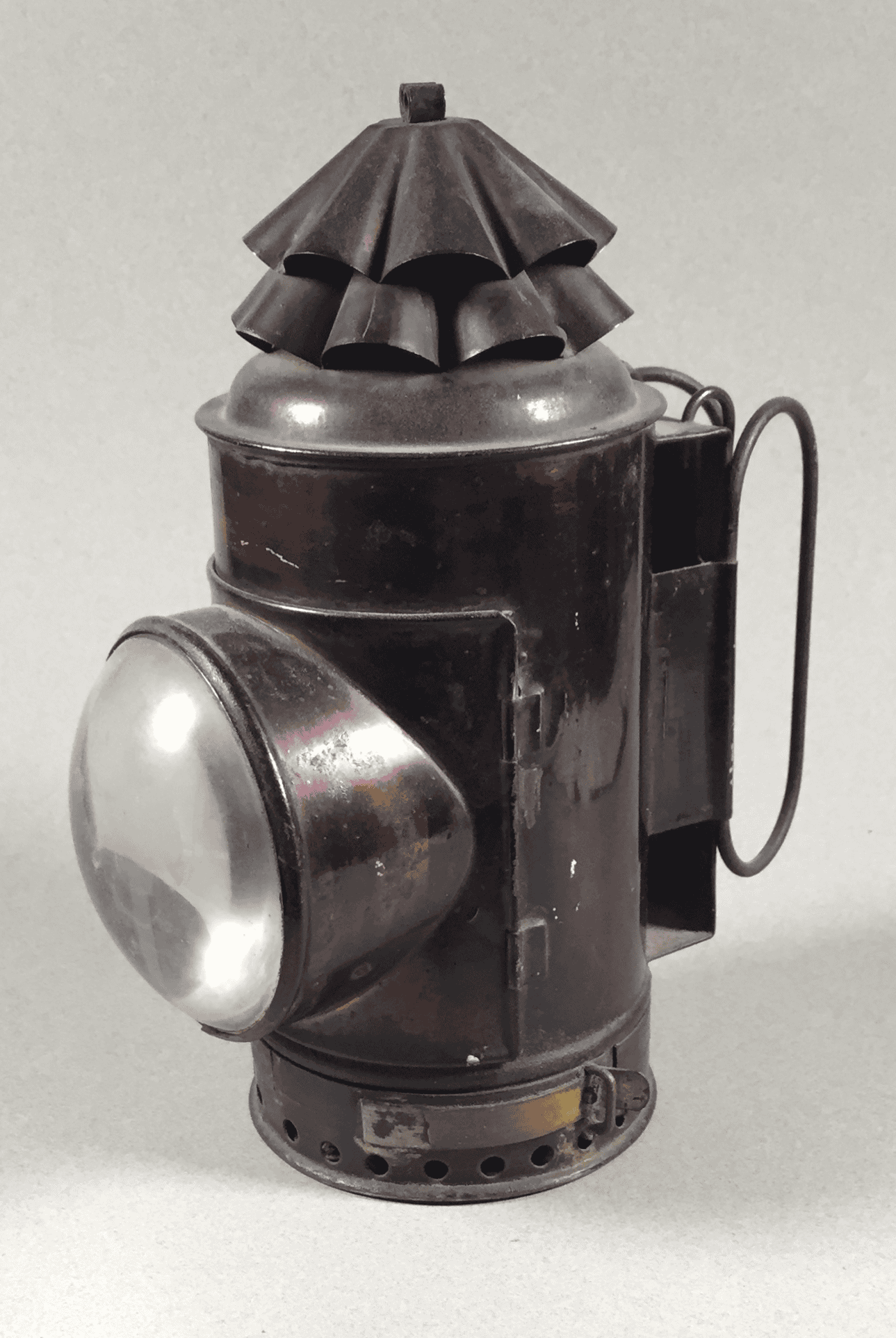
A Dietz Police Flashlight, 3″ lens, made circa the 1890s. The shutter is operated by a thumb lever on the upper back. This example retains most of the original brown “Japanned” lacquer finish over tinned sheet steel — and serves as the model for the Dark Lantern Tales logo.
The Basic Anatomy
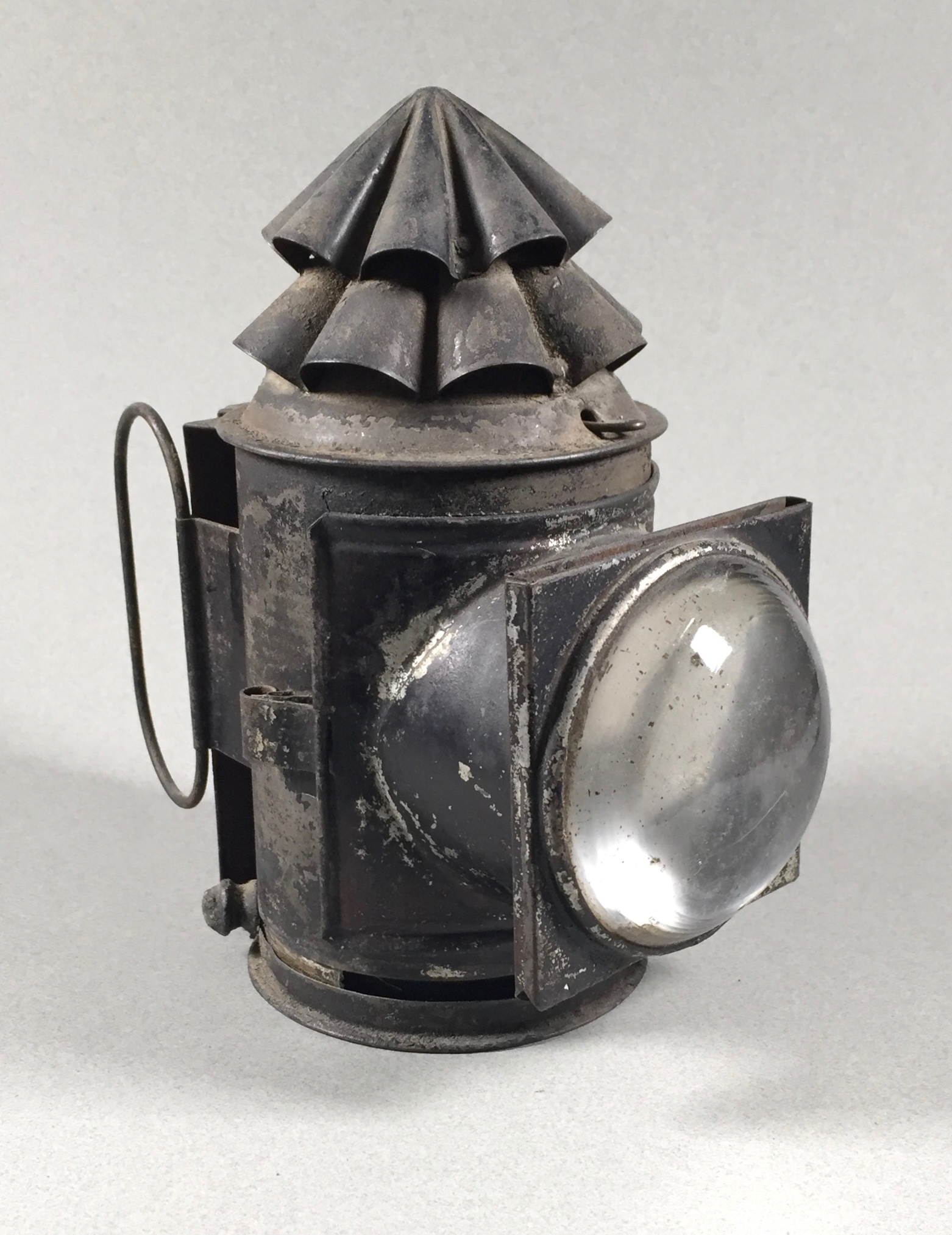
Typical dark lanterns were about the size and shape of a small modern thermos bottle, with a fount for oil in the bottom. A cap with a wick (or wicks) was mounted directly to the top of this reservoir, and in most models the cap also served as a port to fill it. In the cylindrical body, a shutter could be rotated to block light from coming through a large “Bull’s Eye” lens on the front. At the top was a vent that let exhaust from the flame out while retaining the light — usually two metal disks stamped into flutes that taper to the middle, giving a ruffled top to the whole device.
At the back were wire handles to protect the user from the hot sides — policemen and watchmen kept them lit for upwards of six hours while on patrol — and usually a clip to hang the lantern on the user’s belt. Anecdotes describe patrolmen keeping a lit lantern on their belt beneath their great coat to stay warm in very cold weather.
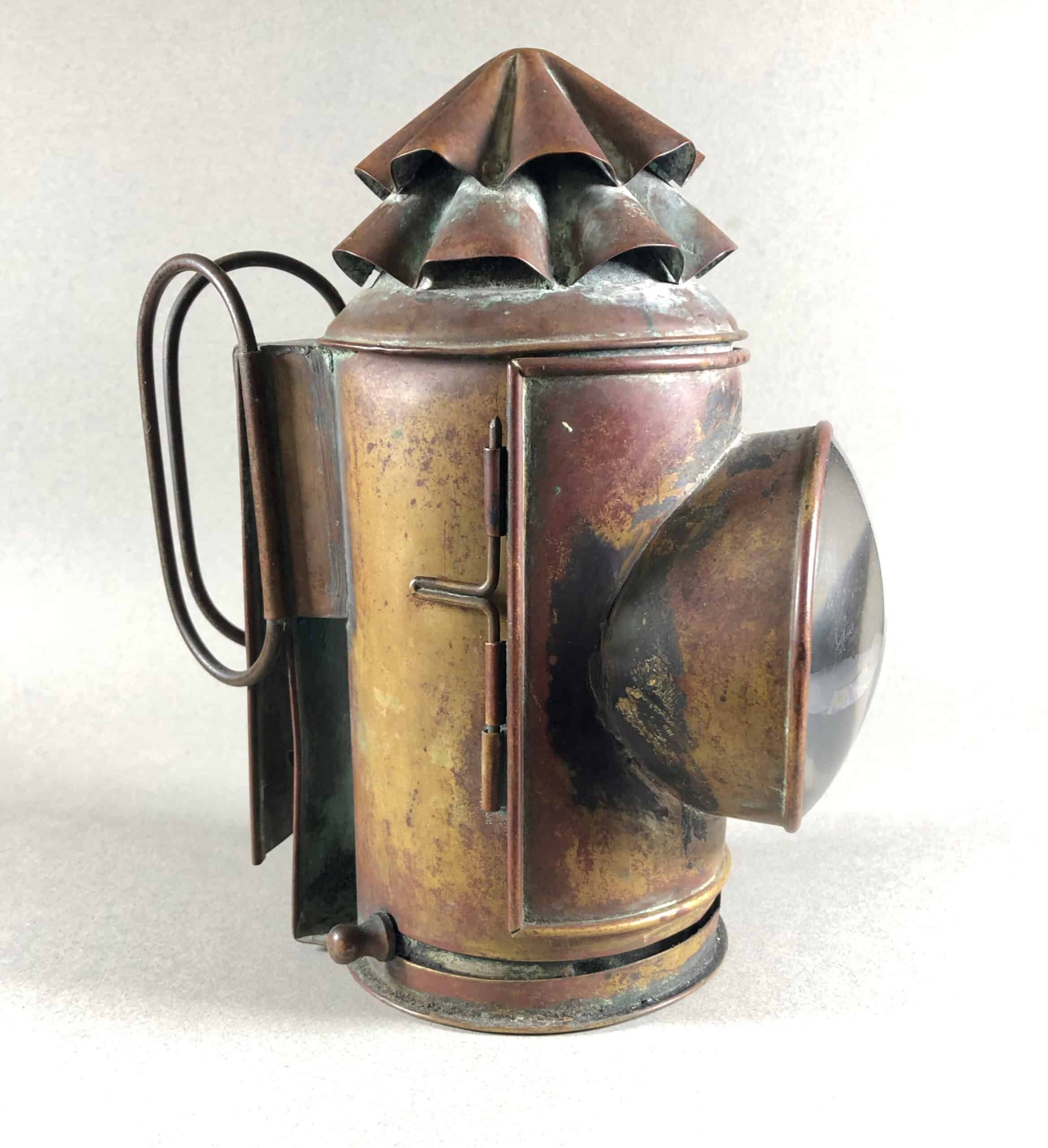
These lanterns were made of sheet steel or sheet iron, plated with tin. The least expensive and most common finish was “Japanning” — a lacquer of tar baked to a shiny brown or black finish. More expensive lanterns were polished tin, or brass.
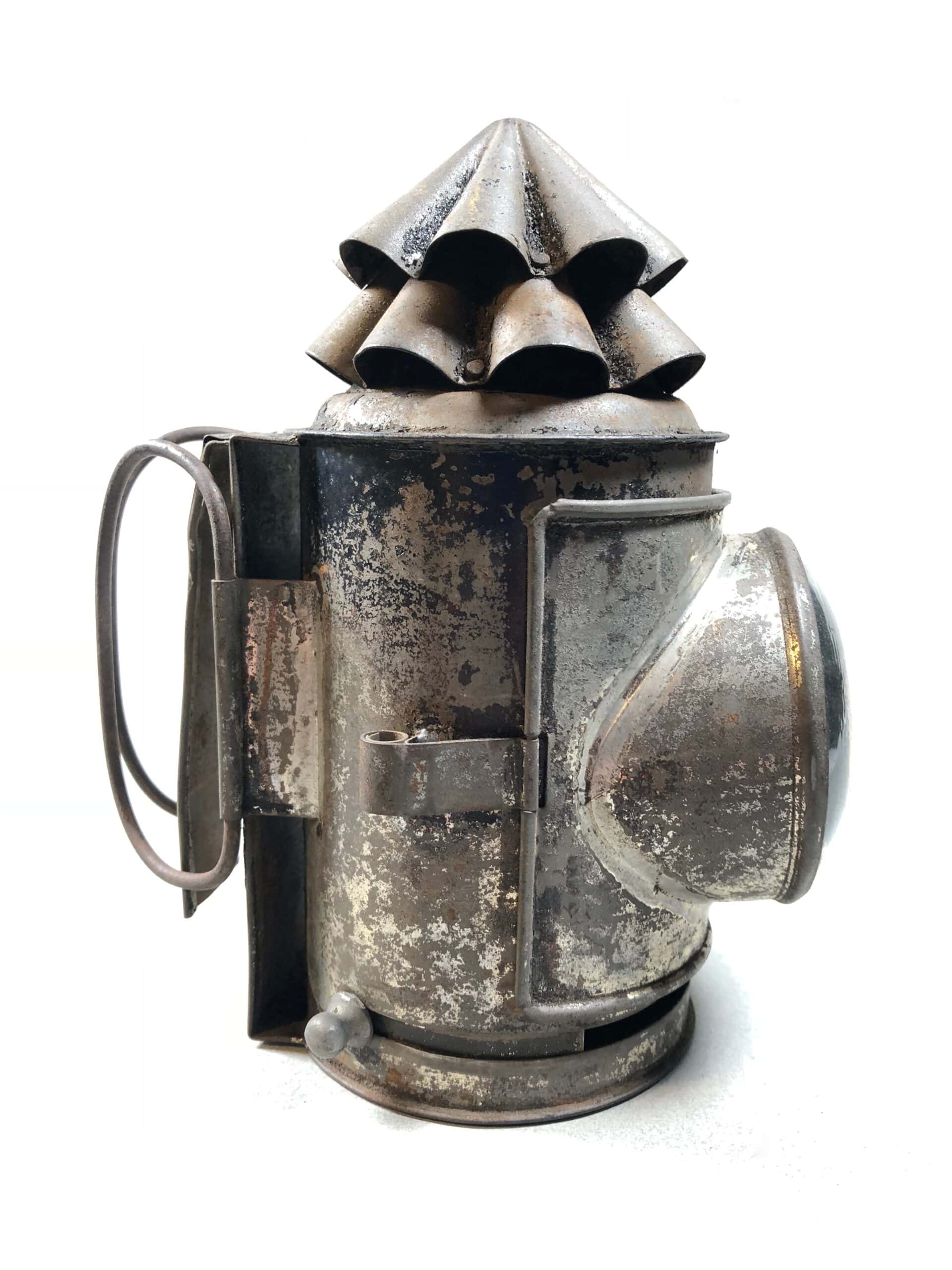
An American dark lantern made sometime from the 1880s to the early 1900s. Originally tin-plated with brown lacquer, later repainted black. Parts of each finish are visible, along with some surface rust.
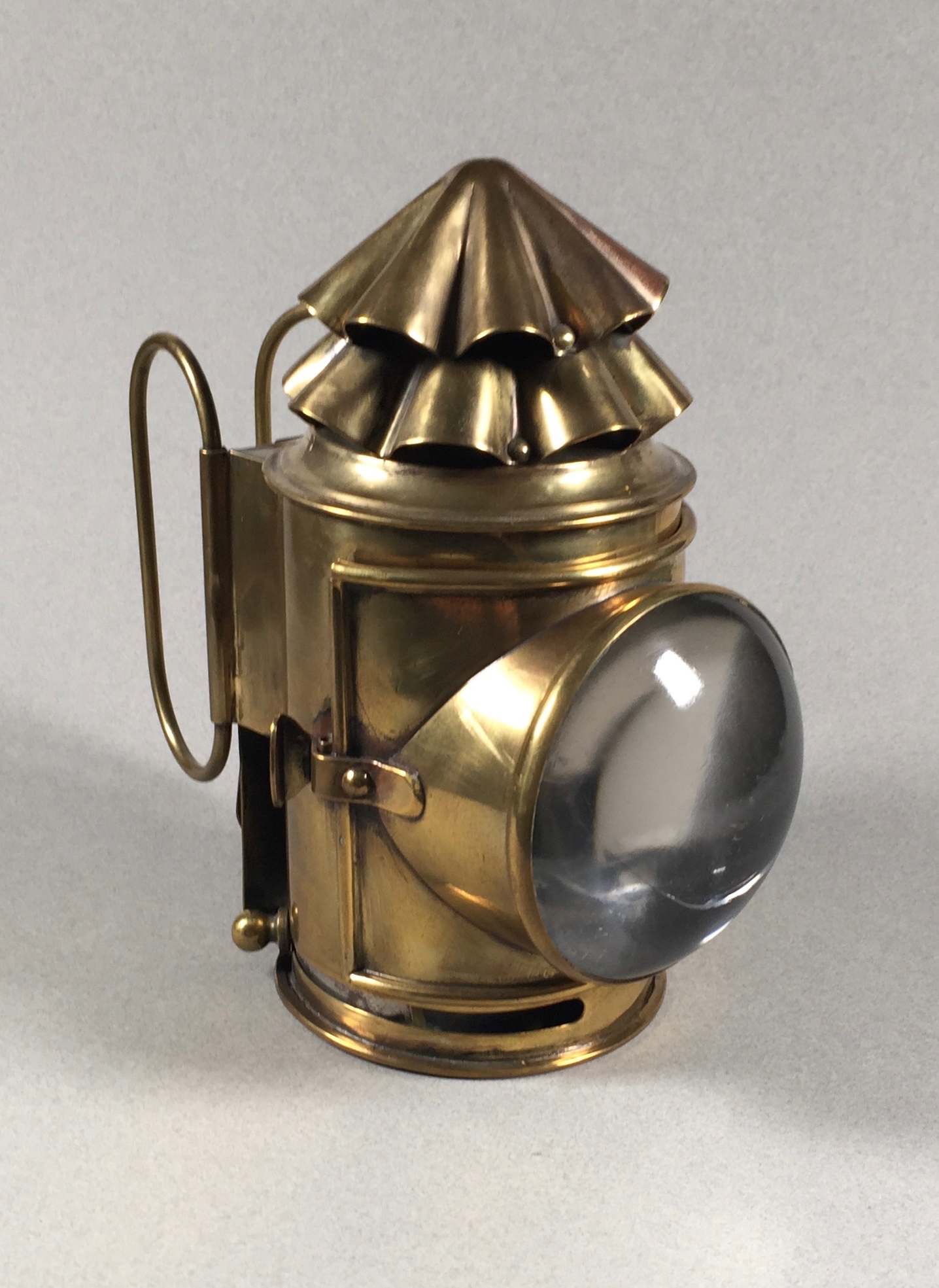
Brass Dark Lantern with Whale-oil / Signal-oil wicks, ca 1900.
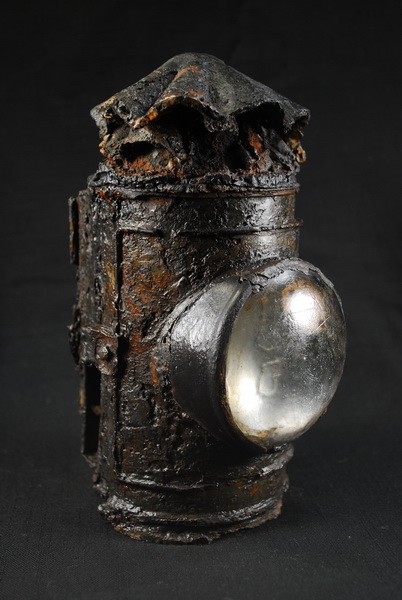
The dark lantern found in the Confederate submarine Hunley, recovered 136 years after the sub sank in 1864.
The Civil War — and After
The earliest images of a dark lantern this writer can locate date from the American Civil War. A fairly standard lantern was aboard the Confederate submarine Hunley, conserved from the lump of rust and concretion in which it was found. The Hunley sank in 1864 and was finally recovered 136 years later.
Another Civil War image involves Confederate forces again: an illustration of troops in the dark with two lanterns, on the front page of an 1862 Harper’s Weekly. The original is a wood engraving made after a Winslow Homer drawing.
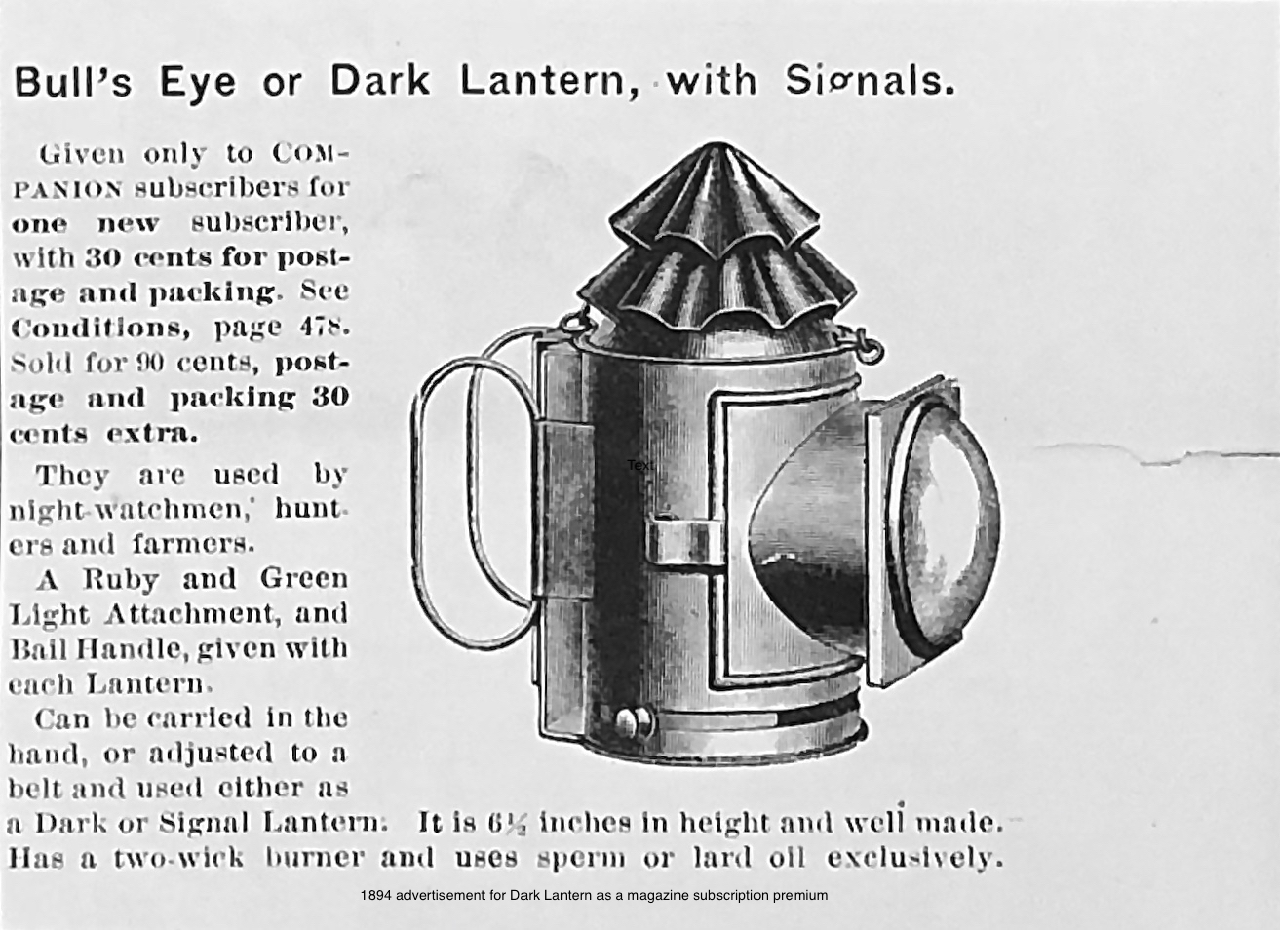
Dark lanterns can be found with flat wicks, dual round wicks, and single round wicks. Later models tended to have more elaborate flat-wick burners and usually used kerosene. Whale oil (the best type was called “Sperm” oil) was the original fuel for the dual round wicks. Later, a cheaper alternative called “Signal Oil” was developed to work with the same wicks — various recipes of kerosene and lard, sometimes vegetable oil (“fruit oil”).
Dark lanterns were used by police forces in both America and in England, and the standard design may have come originally from England. British lanterns are often of heavier construction, and some have three fluted vents on the top.
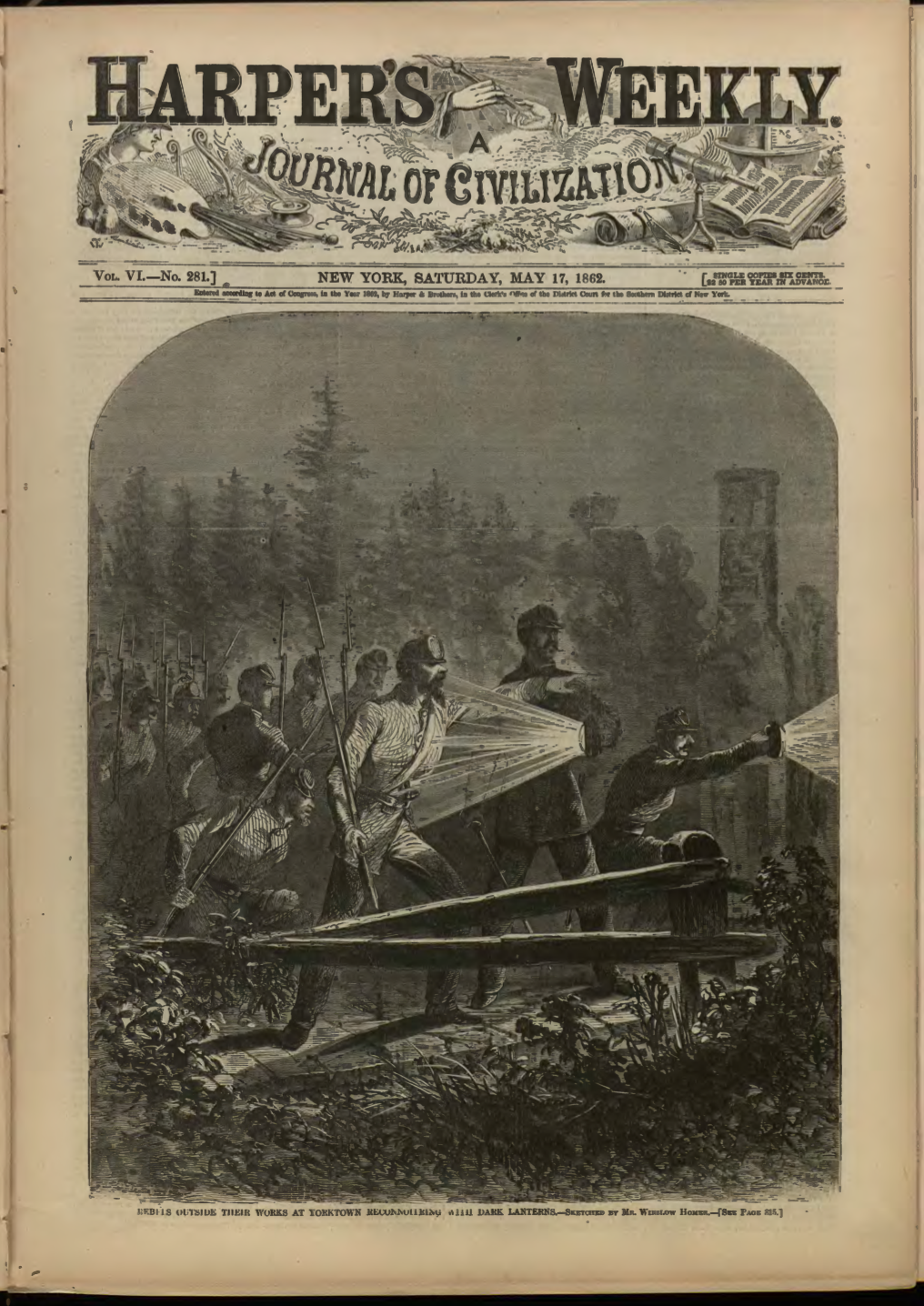
Harper’s Weekly, 1862 — Confederate forces at night with two dark lanterns in use.
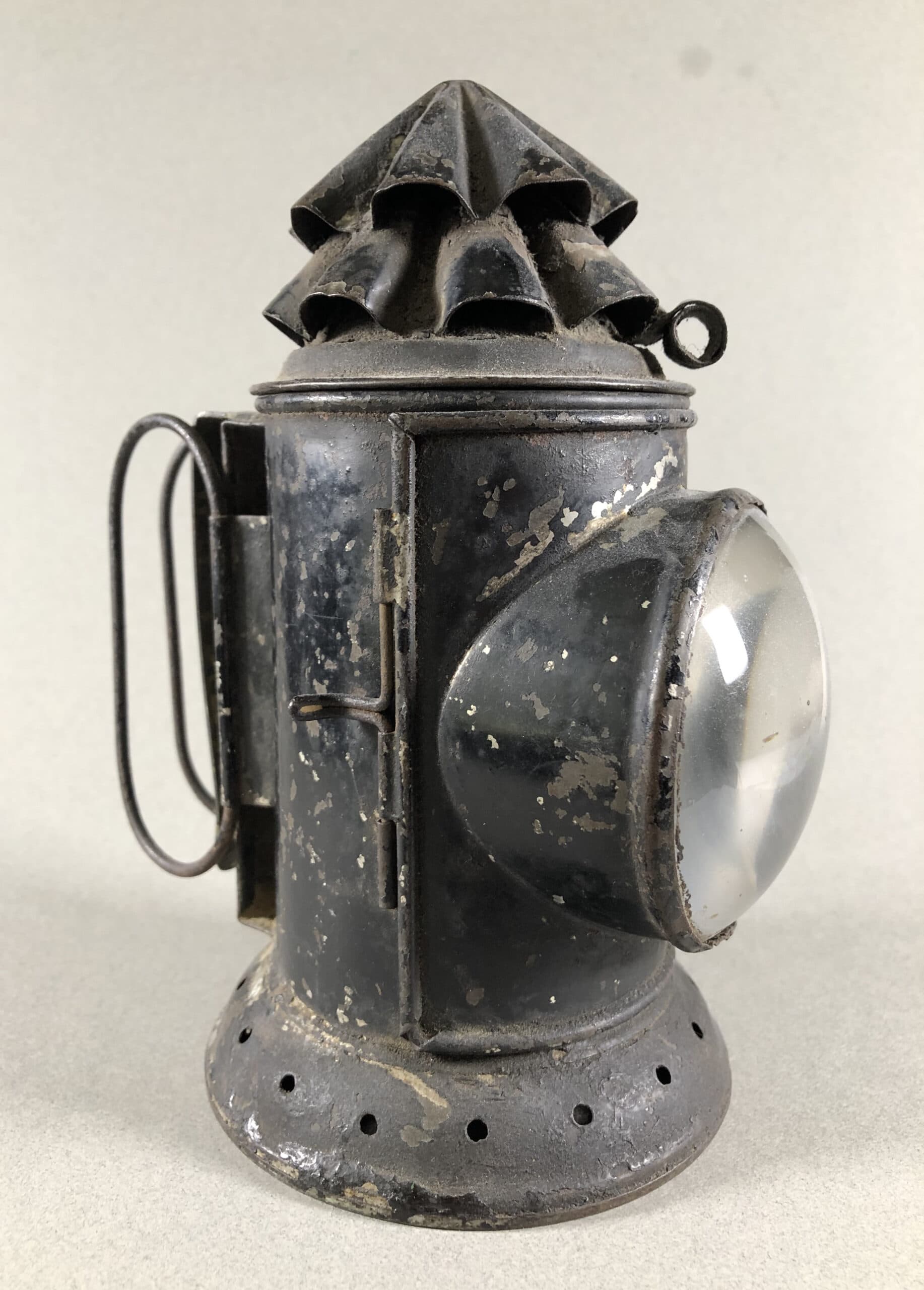
Adams & Westlake made railroad equipment from the mid-19th century to the present day. This lantern may have seen use with a police force, a watchman, or a railroad in the 1890s or 1900s.
The Shutter
The shutters could be closed by any of several methods. The simplest, seen on lanterns made over many years, was to make the shutter part of the top — the operator rotated the top to open or close the light. When open, the shutter serves as a reflector behind the wick, and some of these lanterns can be easily disassembled for cleaning by pulling the top up. The Adams & Westlake lantern illustrates this design.
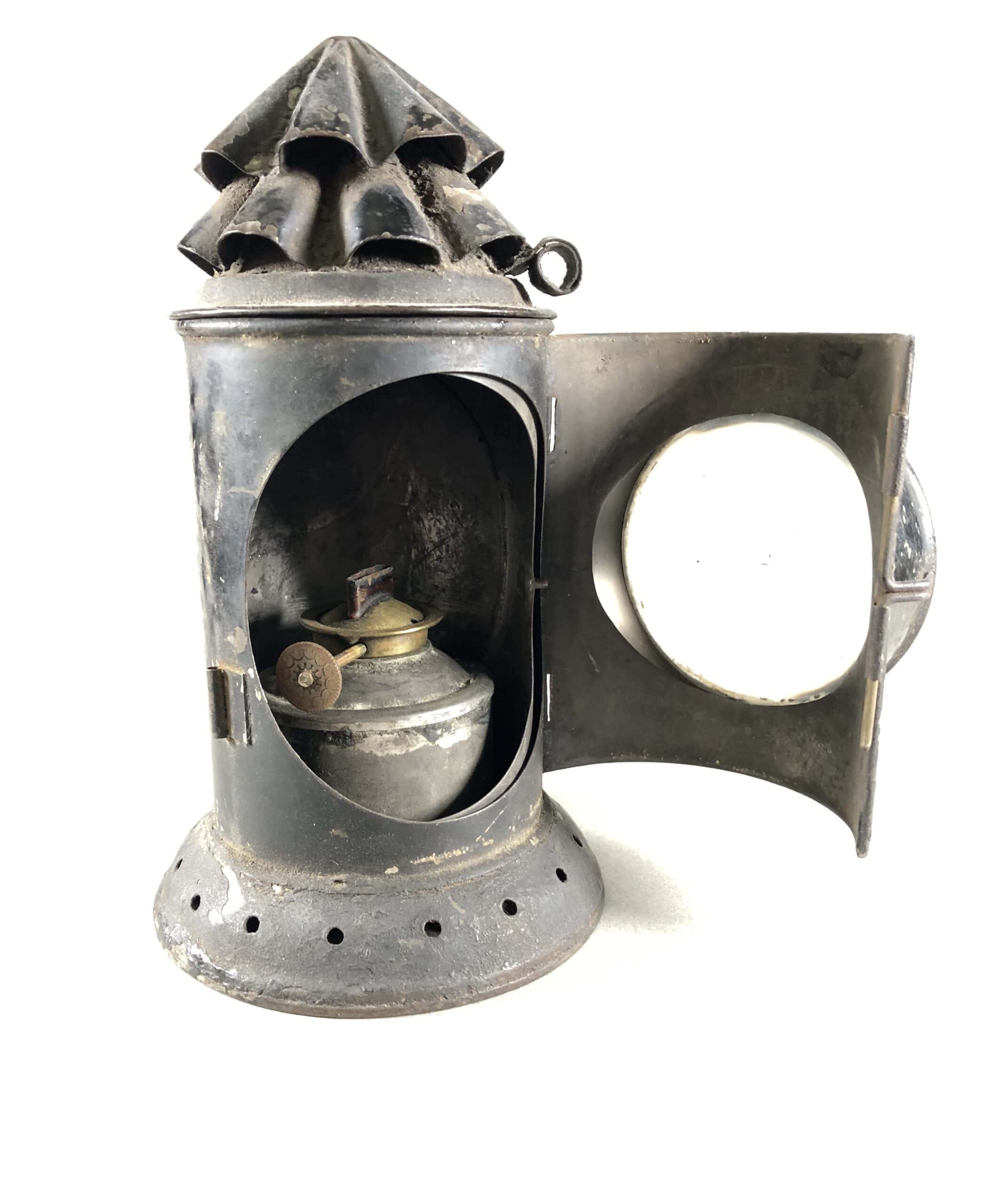
Shutter open. Top fully rotated counter-clockwise — light passes.
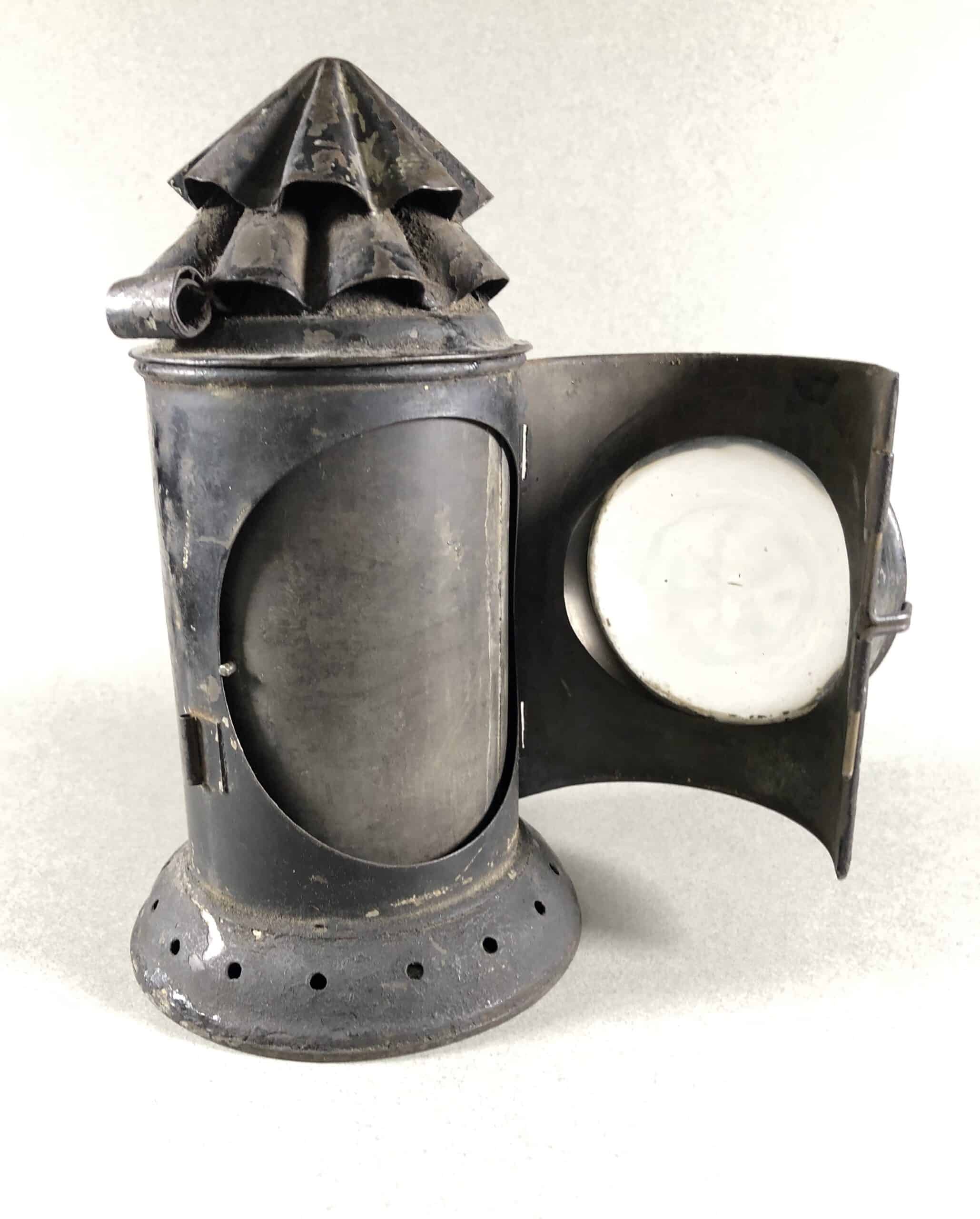
Shutter closed. Top rotated clockwise — light blocked.
Another common design controls the shutter with a knob in a slot at the bottom right of the lantern. Pushing the knob around to the front closes off the light.
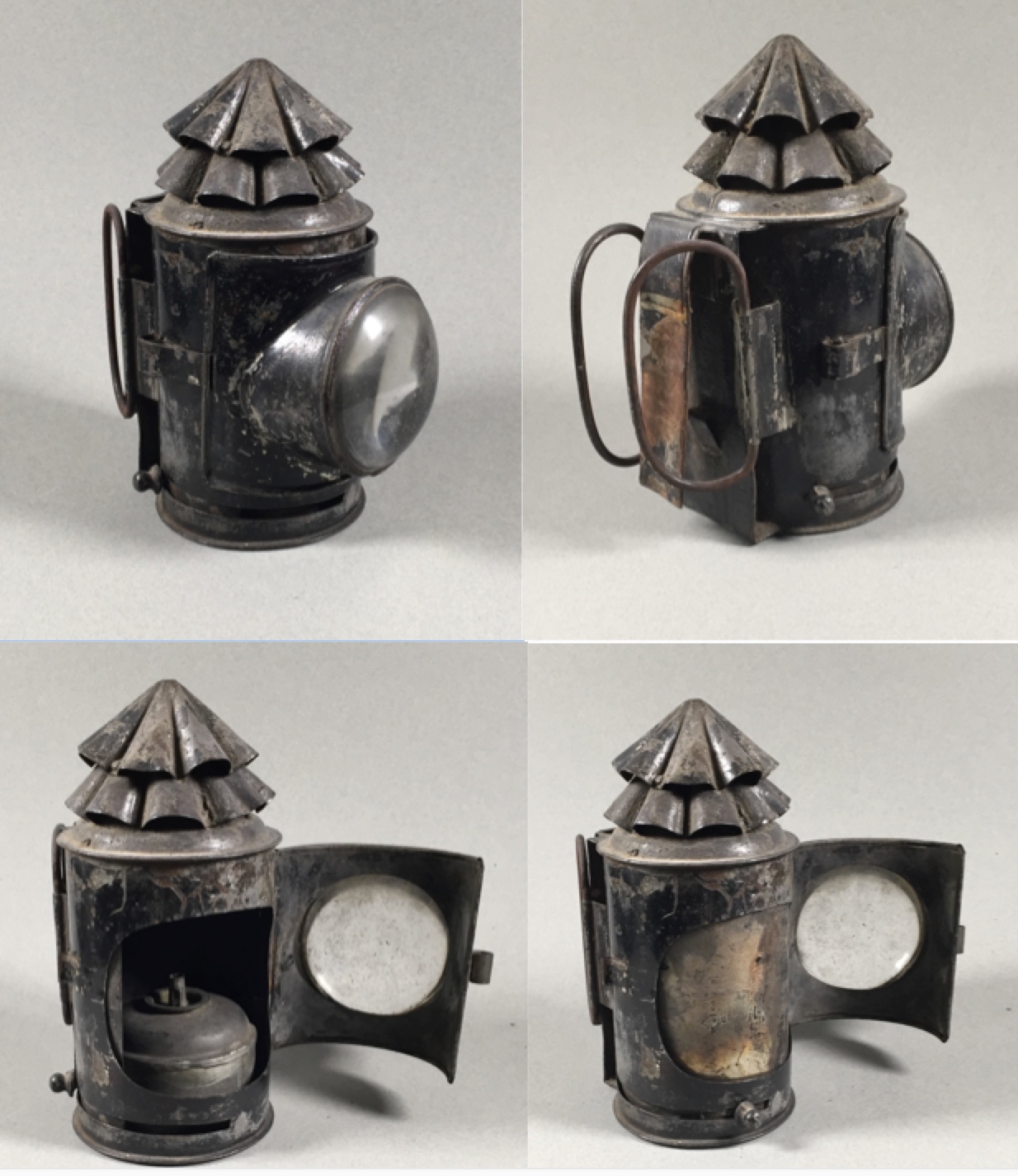
An 1890s Dark Lantern showing shutter open and closed.
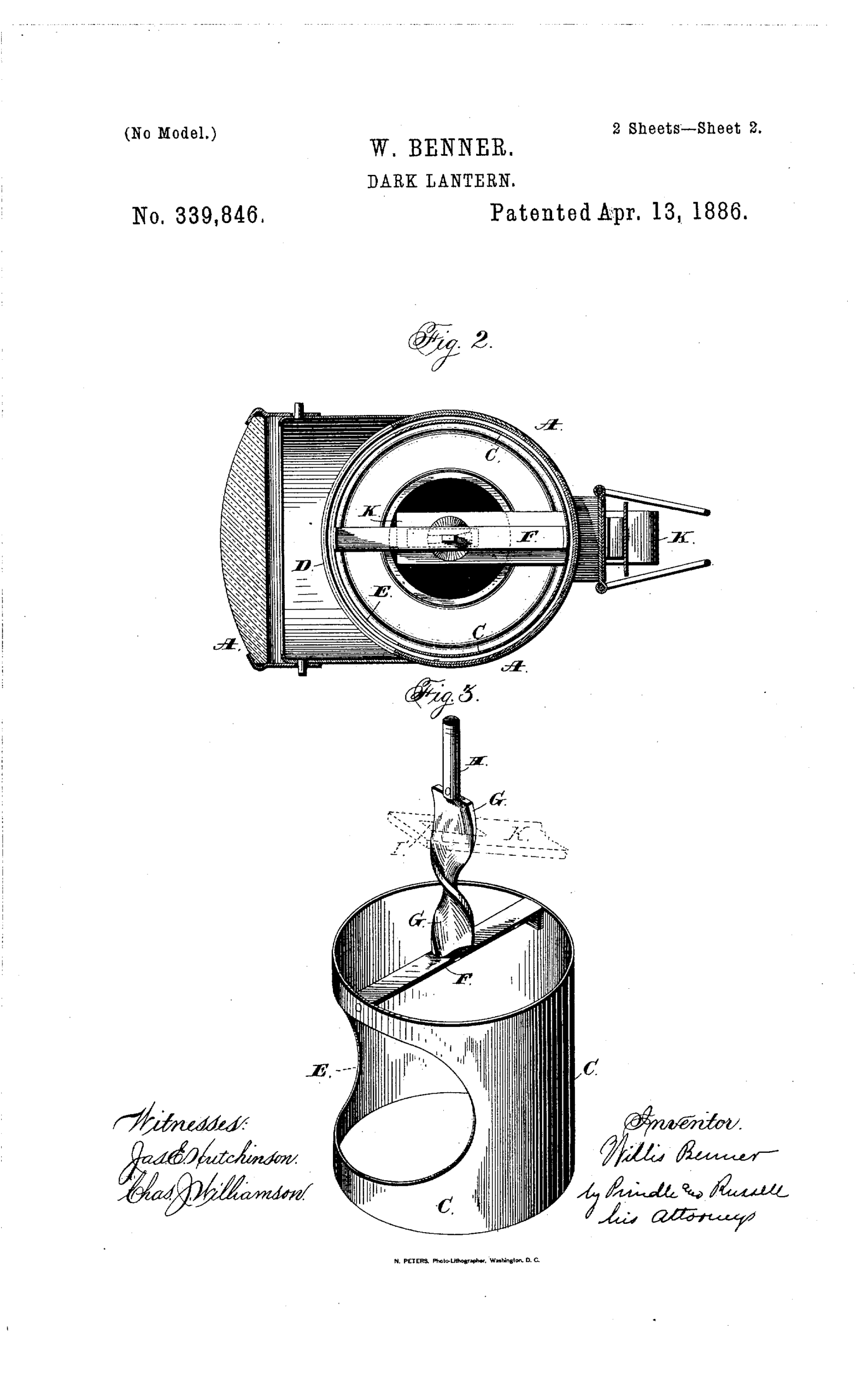
1886 Dark Lantern patent drawing — the design sold from 1888 as the Dietz Police Flashlight.
In Dime-Novel Fiction
Pocket dark lanterns were made in several designs — and both the Joe Phenix and Nick Carter stories mention these. Dietz made a pocket lantern with a decorative finish and a door in the front. Advertisements of the time (ca 1890) show it clipped to the breast pocket of a gentleman’s suit in darkened surroundings, to help him read a newspaper. A smaller lantern design in this writer’s collection has a single wick and is more truly a pocket-sized dark lantern type that would fit the description in these detective stories.
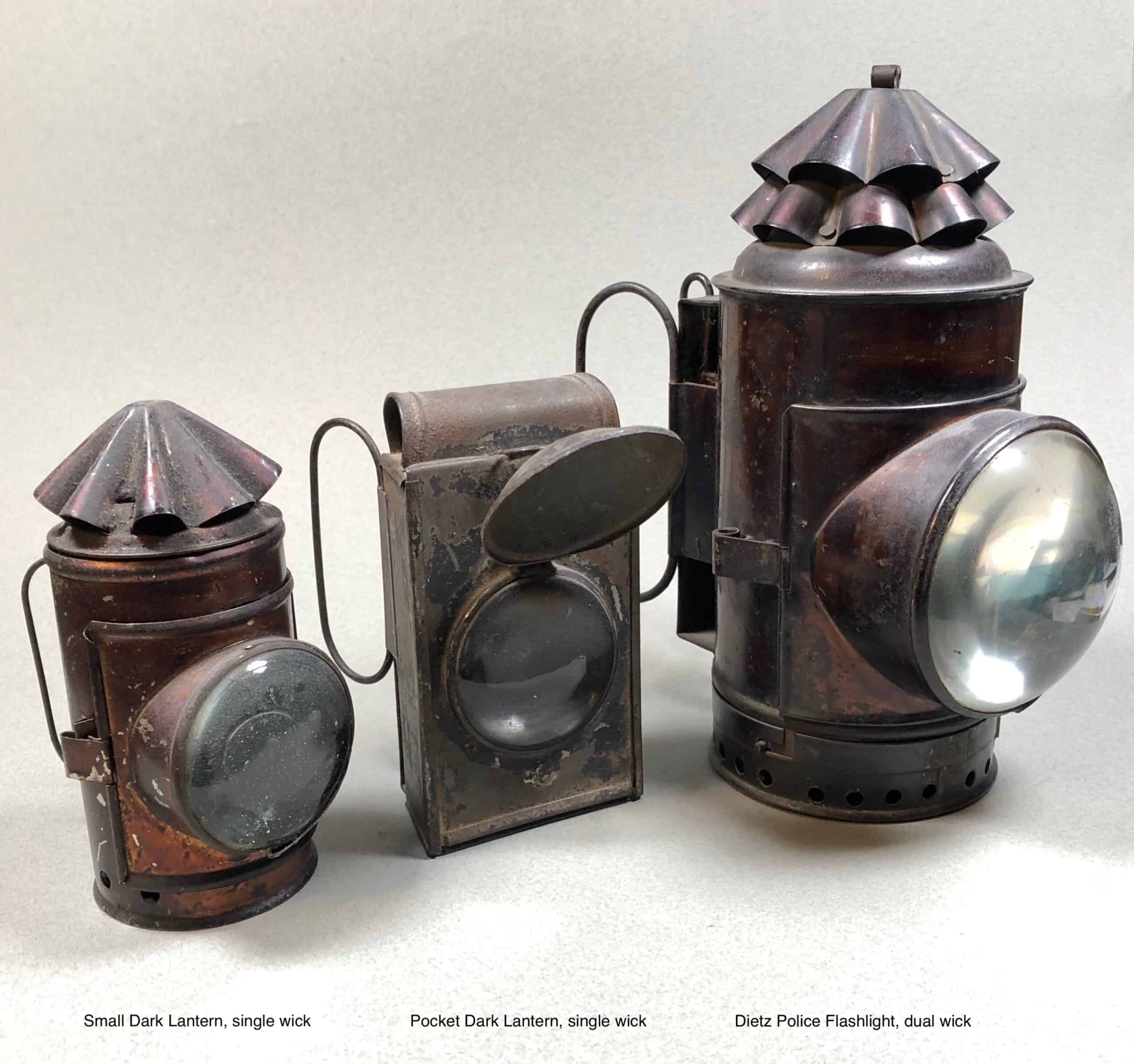
Three lanterns of different sizes, including a compact pocket-sized model at left.
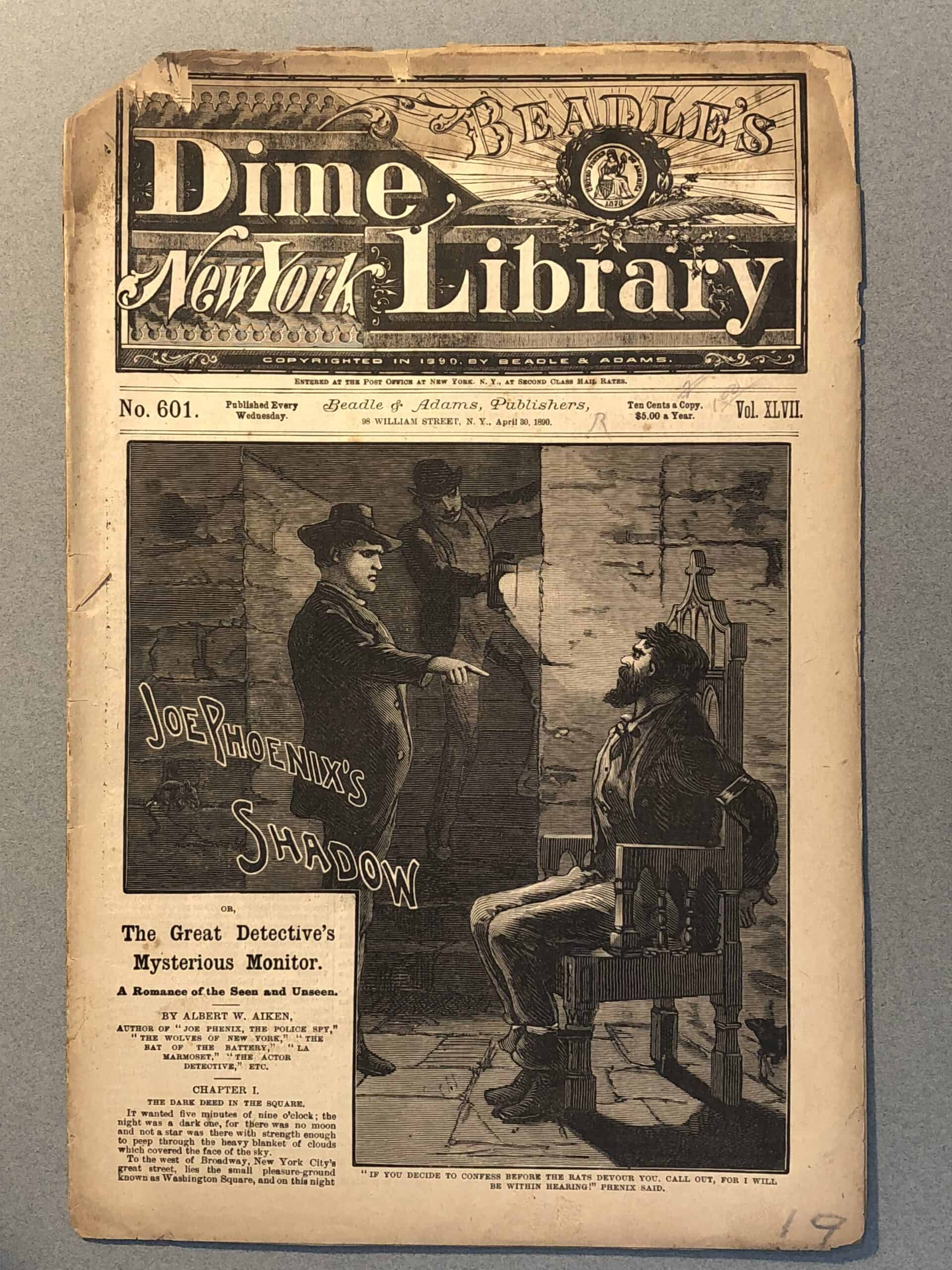
Beadle’s New York Dime Library, 1890 — a dark lantern in use. Described in the story as a bullseye lantern, but the same as a police lantern.
The Electric Turnover
Battery technology evolved, and in the mid-1890s the first portable electric lanterns were offered for sale. Even so, the simple and reliable oil lanterns continued to be used for many years. Dietz in particular continued to make oil-burning dark lanterns until at least the late 1920s. In London, the Metropolitan Police converted to electric lanterns, reportedly with some reluctance, in the 1920s. Rural America was still not fully electrified, and in small communities a simple lantern fuelled by easily found oil might have engendered more confidence in a policeman than a lantern powered by a battery.
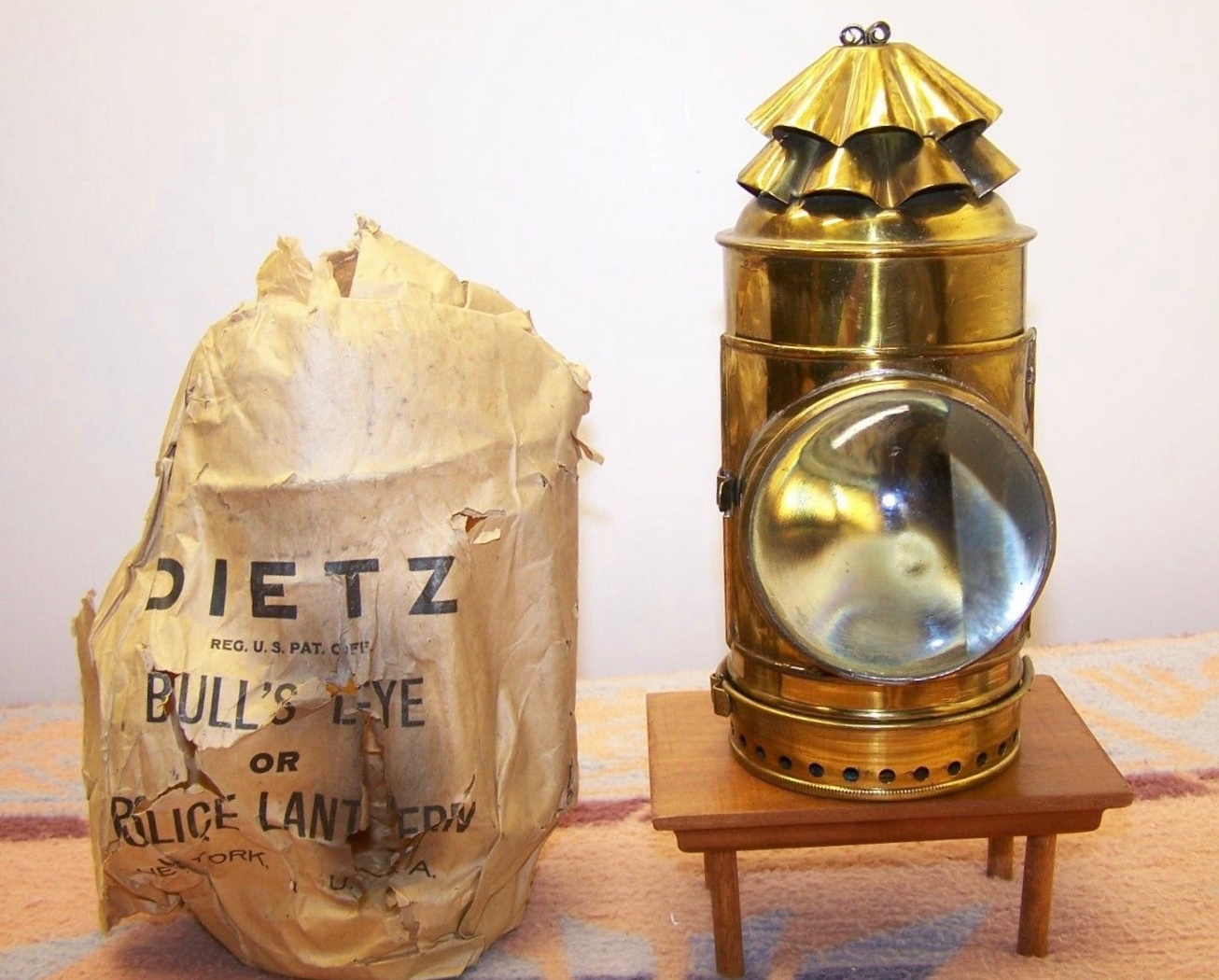
A 100+ year-old lantern in its original wrapping — these were typically shipped in cases of a dozen, the paper wrap to protect each lantern’s finish.
Sizes & Collecting
Dark lanterns come in a range of sizes. A standard series runs 5 inches tall, 6¾ inches, 7½ inches, and 9 inches — with lenses from 2 inches up to 4 inches across. Below is a triptych of brass-finish examples, followed by two group shots.
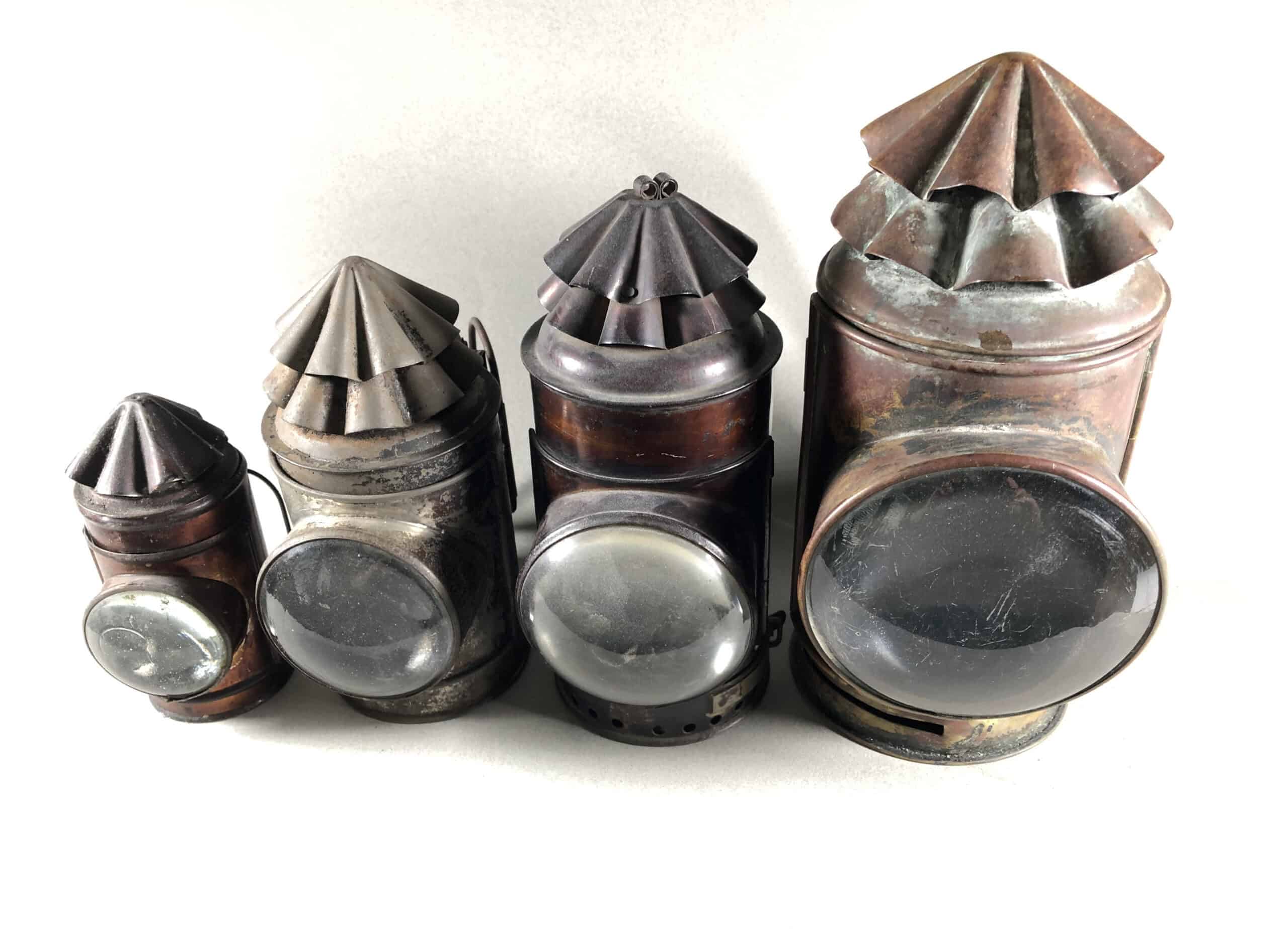
Four police lanterns — ca 1890, sizes 5″ through 9″.
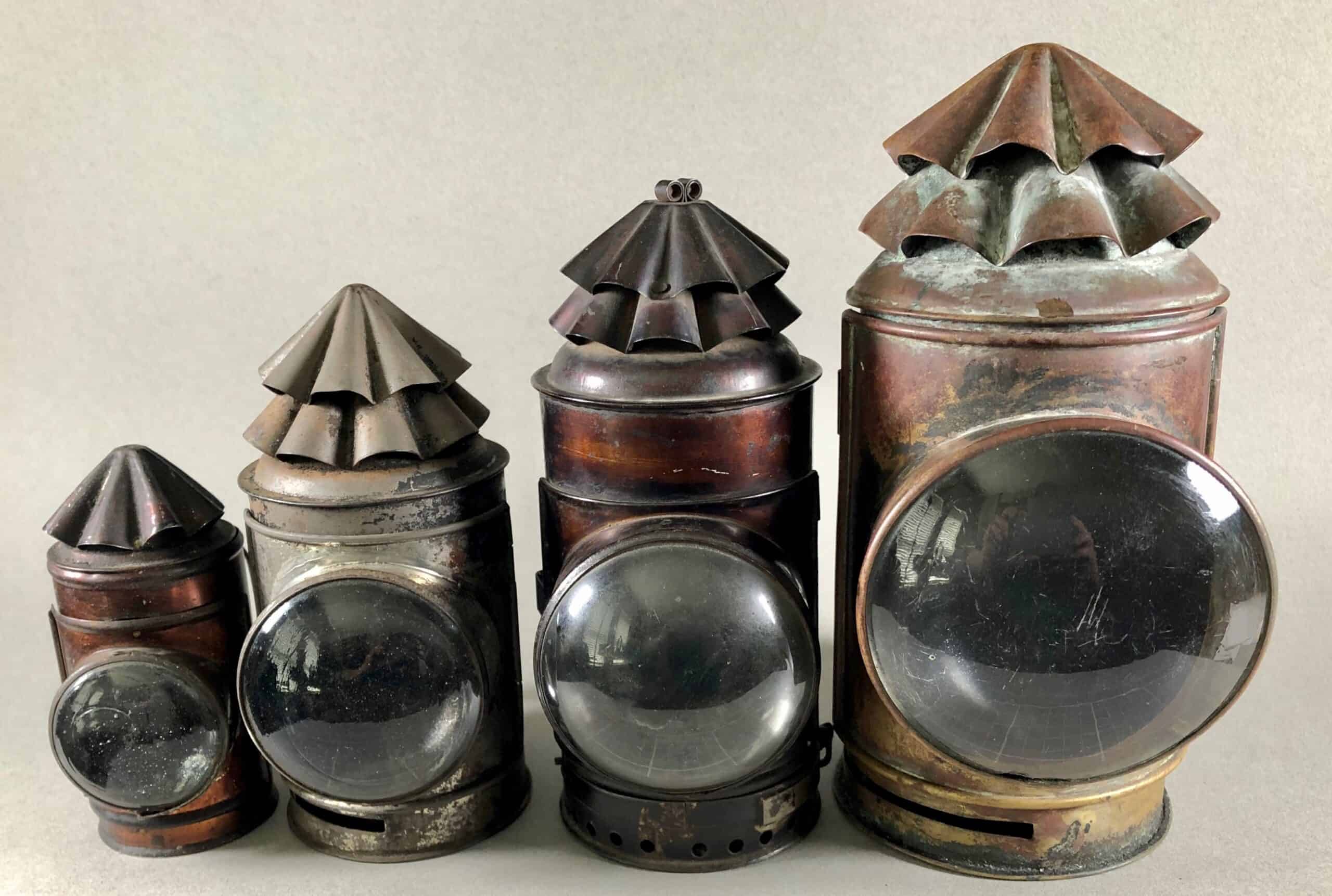
Same set, lined up by lens size: 2″, 2¾″, 3″, and 4″ across.
The dark lantern design still had a viable place on boats into the 1950s. Made by Perkins (Perko), boat lanterns evolved to have Fresnel lenses; many can be found marked “Boat Signal” or “Boat Lantern.” These operate with the familiar knob near the bottom and could double as a slightly awkward signal light.
W. T. Kirkman Lanterns may be able to make you an authentic, brand-new Police Lantern. If anyone can, Kirkman can handle the job.
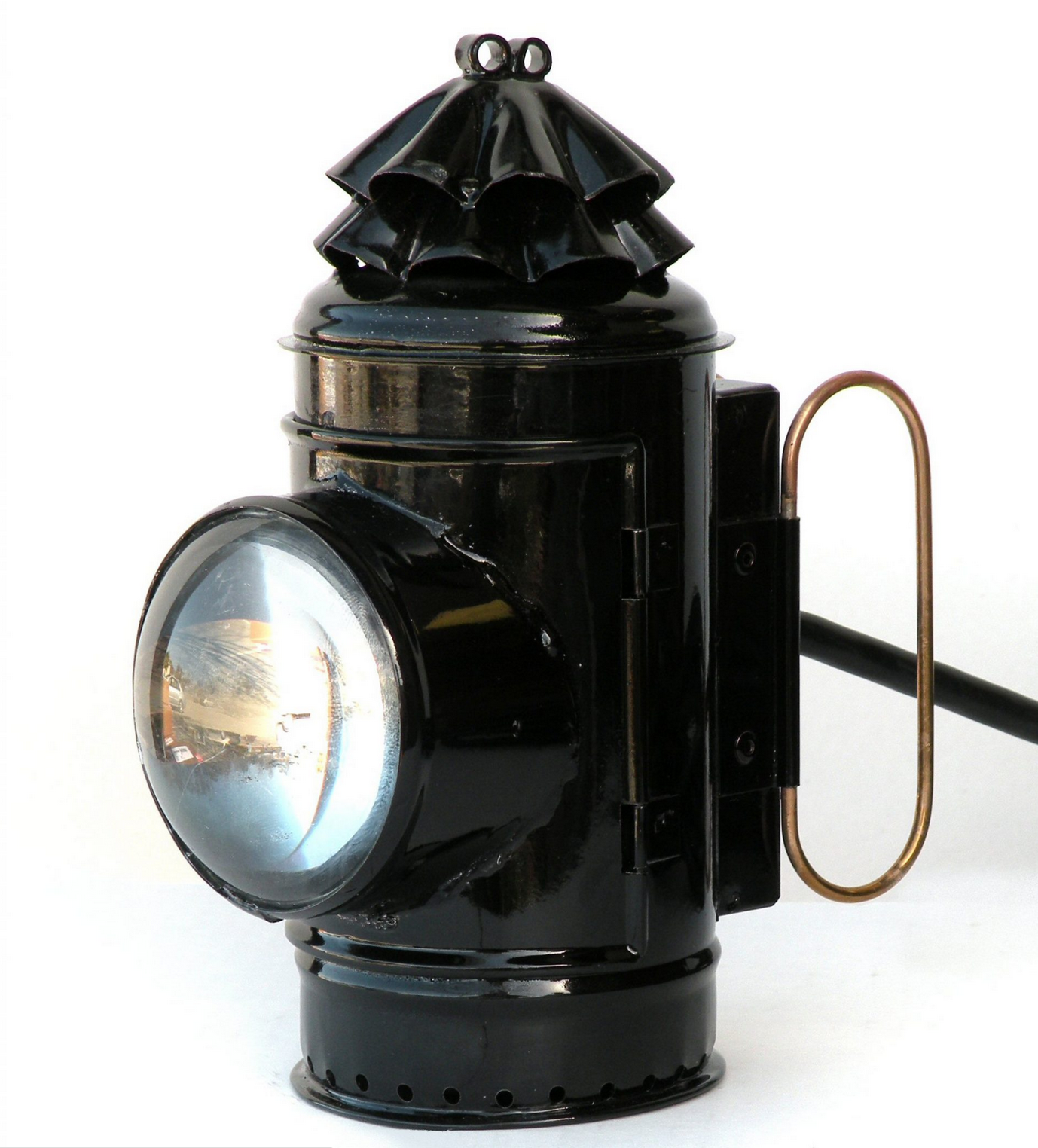
W.T. Kirkman Lanterns — authentic, brand-new reproductions.
Many thanks to The Friends of the Hunley for permission to use the image of their historic lantern in this article.
“Most lanterns shed light. Dark lanterns hide it — until you choose otherwise.”
— Mark Williams, Dark Lantern Tales