Clews & Curios · Historical Background
Before the Police Whistle
Alarm rattles, watchmen, and the hardware of nineteenth-century policing — before the whistle and the call box, an officer summoned help with a SNAP heard for blocks.
An alarm rattle from the middle 1800s, US-made, would have been carried by some police forces, fire brigades, and watchmen. The user grasps the handle and swings the weighted end through the air, causing each gear tooth to pull and release a heavy wooden reed against the next tooth. Each release made a loud SNAP — and the distinctive rattle could be heard for blocks in a quiet city at night.
This particular rattle is held together with wooden pegs, establishing its age. Most rattles were manufactured by tool-making companies. Similar designs were made hundreds of years in the past, and the earliest police uniforms in England during the 1840s included a pocket in the tail of the coat to hold the officer’s rattle.
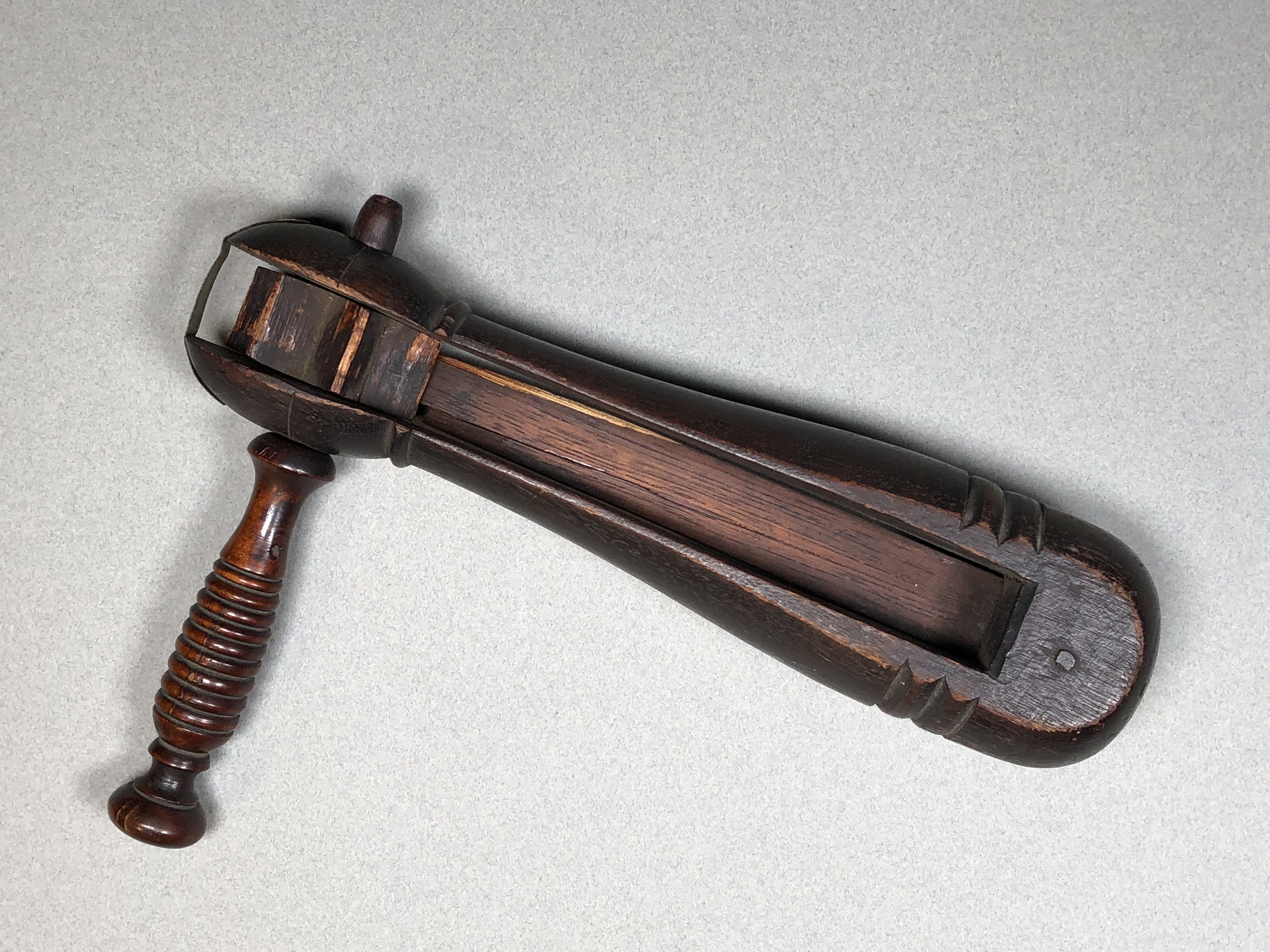
An alarm rattle, US-made, ca 1860 — held together with wooden pegs, the kind of device used by police, fire brigades, and watchmen.
The next image is of two rattles from the later 1800s — a large 9-inch rattle with two reeds, and a small two-reed rattle that could fit into a coat pocket. The small one has a metal weight to help it spin more effectively, and was probably for a watchman. The large rattle originally had a small knob on the top of the weight, presumably to help turn it if there wasn’t room to just twirl it.
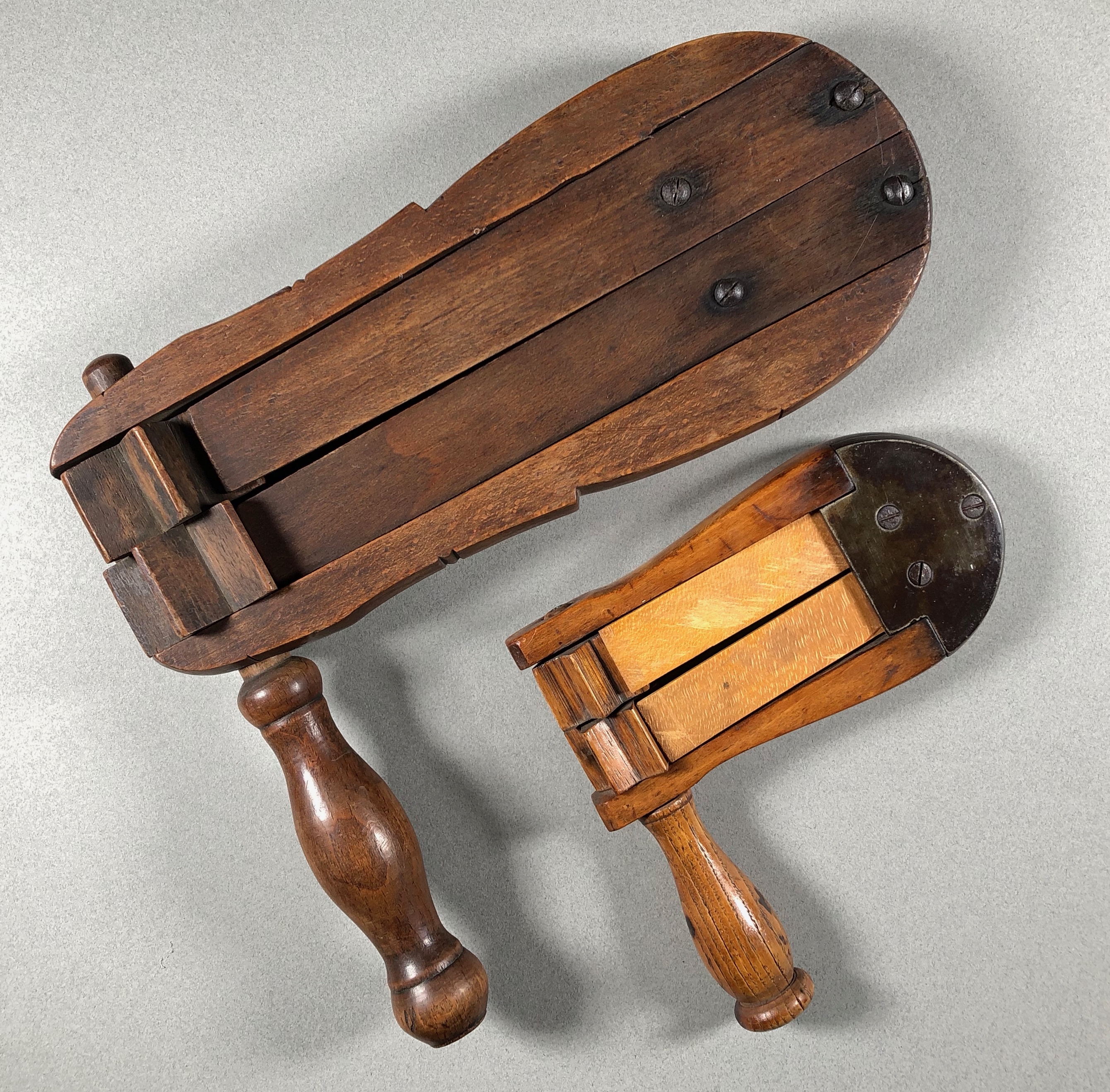
Two later-19th-century rattles — a large 9″ two-reed and a small pocket-sized two-reed.
The Joe Phenix Detective Series novels (1878–1894) don’t mention rattles, possibly because by then the police rattle was no longer widely used in New York where most of the stories were set. Many of the officers in those stories signal to each other while patrolling at night by rapping their nightsticks on the cobblestones in the street. The nightstick shown below meets the 1890s specifications for the New York Police Department. It has a blue tassel (it should have two but one is missing), signifying the owner was a “Foot, Bicycle, or Harbor” patrolman or sergeant. The small brass plate was stamped with the officer’s badge number.
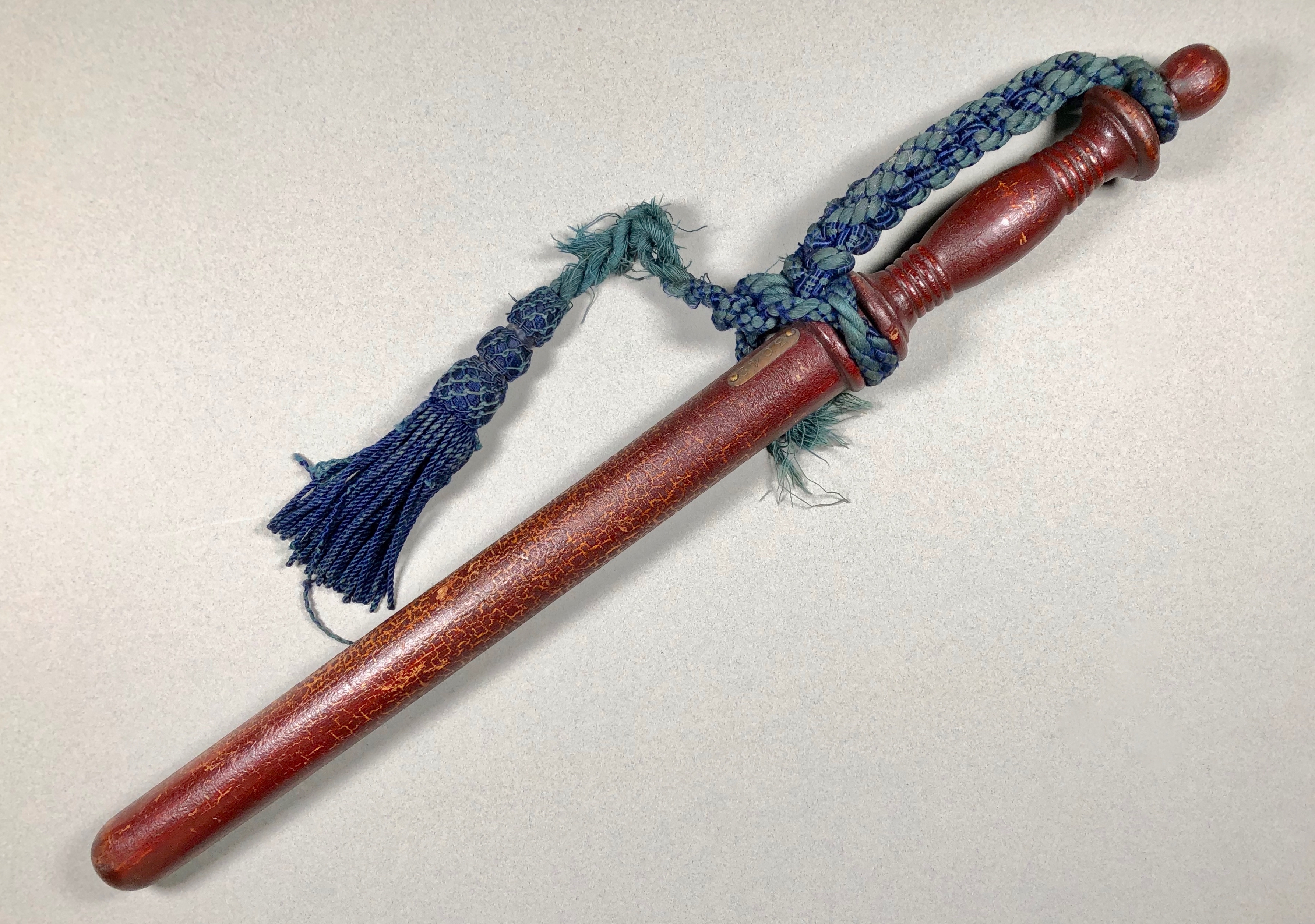
An 1890s-spec NYPD nightstick — the blue tassel signifies a “Foot, Bicycle, or Harbor” patrolman or sergeant; the small brass plate was stamped with the officer’s badge number.
This ad for police equipment sold by the John J. Tower Company appeared in an American Centennial guide published in 1876. It pictures a rattle with folding handle, which must have been much easier to carry.
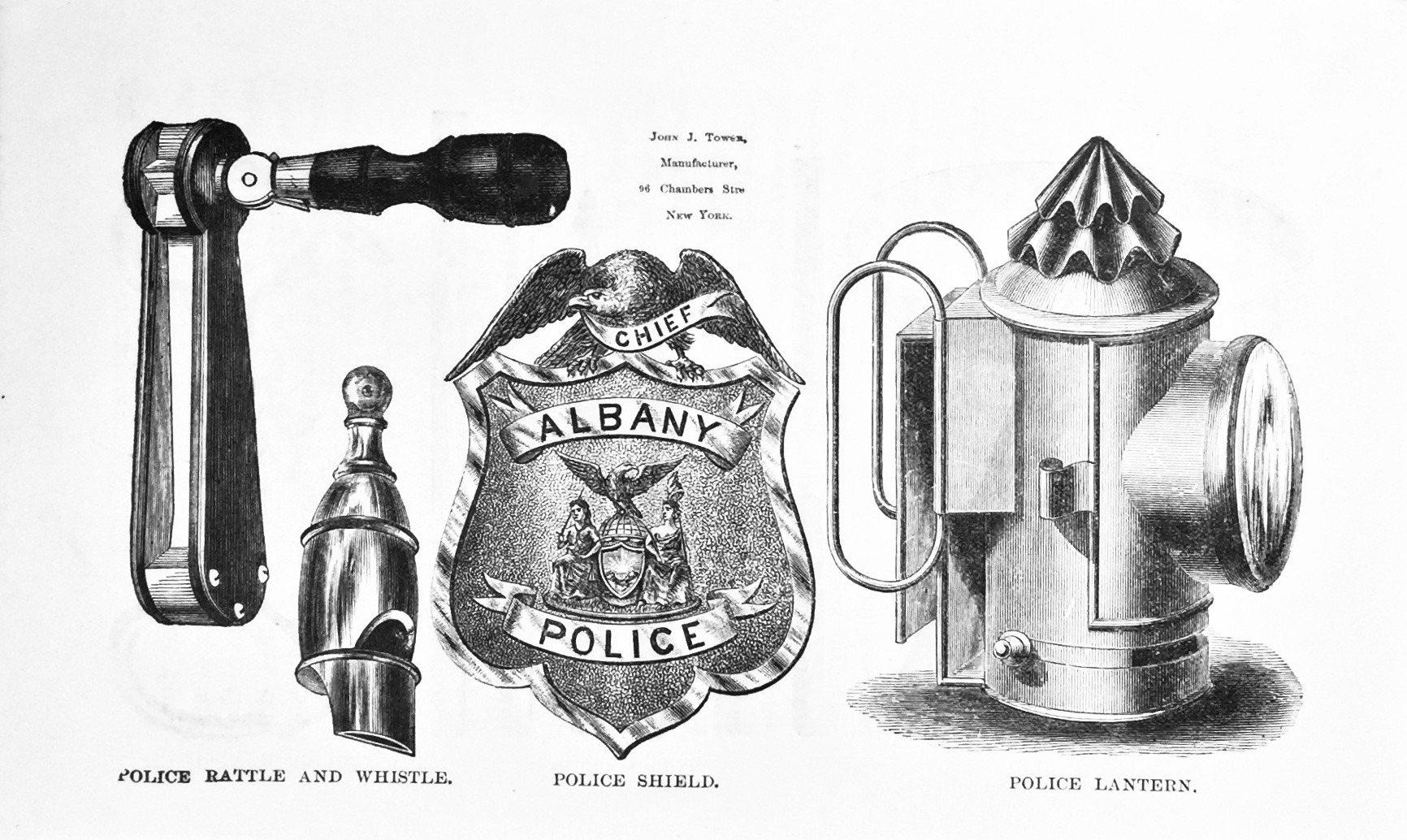
John J. Tower Company police-equipment ad, 1876 — note the folding-handle rattle alongside an early whistle.
Interestingly, that ad shows both a rattle and a whistle. In England, the Metropolitan Police tested rattles and whistles around 1883 and found that the sound of the whistle carried over the greatest distance. Rattles were soon out of use for police, but continued in service elsewhere — wooden ships of the Navy used them for signalling crew to stations through the 1800s; in the First World War rattles were one of many noise-makers used to signal gas attacks; farmers used simple versions to scare off birds; sports fans rattled them at games into the twentieth century. But police forces seem to have discontinued them by the end of the 1880s.
“The distinctive rattle could be heard for blocks in a quiet city at night.”
— Mark Williams, Dark Lantern Tales