
Clews & Curios · NYC Stories
Life with the Elevated Train
Steam, soot, and a passenger’s face six feet from your kitchen window — Manhattan’s elevated railways defined the daily texture of the city for nearly a century.
From the 1870s through the mid-twentieth century, Manhattan’s elevated railways defined the character of entire neighborhoods. Steam-powered trains thundered along iron trestles above the avenues, casting permanent shadows on the streets below and bringing noise, soot, and vibration into the lives of everyone who lived and worked in their path.
For residents at track level — typically the second and third floors of tenement buildings — the experience was relentless. Windows rattled, conversations stopped mid-sentence, and the faces of passengers peered directly into apartment windows as trains slowed into stations.
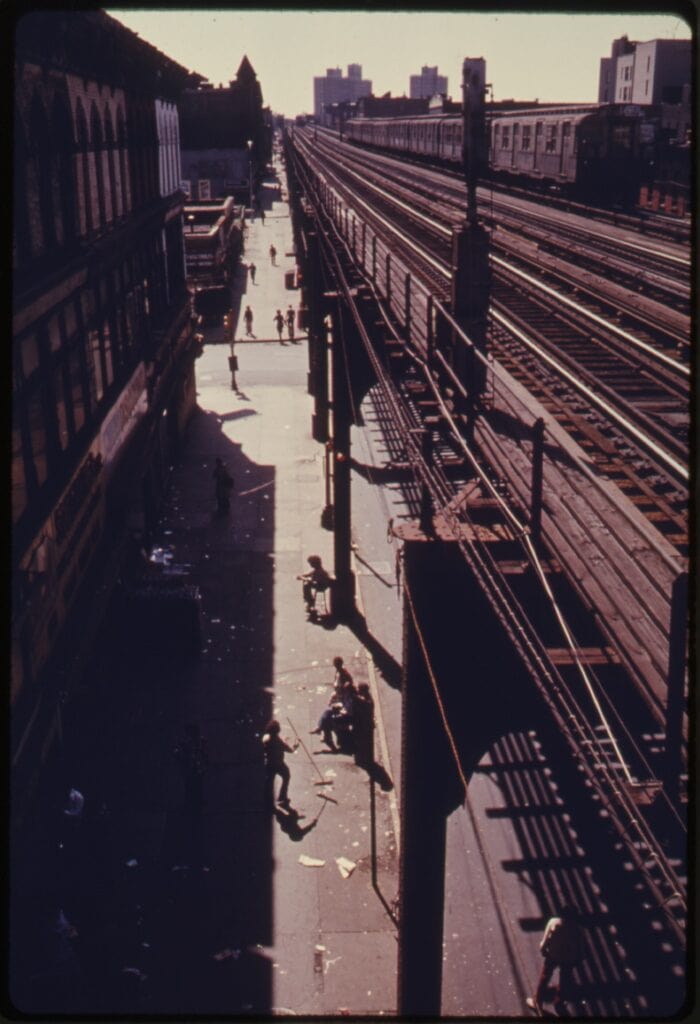
Brooklyn’s Bushwick Avenue, photographed from an elevated train platform — the view that millions of New Yorkers had of their own city.
Yet the El also represented opportunity. Affordable rapid transit meant that working-class New Yorkers could live farther from their jobs, and the cheap rents along elevated lines made housing accessible to immigrants who had few other options. The noise was the price of participation in the life of the city. For those who could afford better, the upper floors of buildings on quieter side streets beckoned. For everyone else, the rumble of the El was simply the sound of home.
The elevated trains are a constant presence in the streets of the Joe Phenix Detective Series. Characters ride the El, chase suspects along its platforms, and conduct surveillance from its cars. The clatter of trains overhead is as much a part of 1890s New York as the gas lamps and cobblestones — and as essential to the atmosphere of the stories as any character.
Read at Ephemeral New York
What Life Was Like with the Elevated Train Roaring by Outside Your Window →
“A hundred times I have thought: New York is a catastrophe, and fifty times: it is a beautiful catastrophe.”
— Le Corbusier, When the Cathedrals Were White