
Clews & Curios · NYC Stories
Yopp’s News & Fruit Stand
A rubber-stamp impression on a tattered 1892 dime novel led to George Yopp of Charlotte, North Carolina — and a small piece of forgotten city history.
As part of my work publishing old detective thrillers in new editions (Dark Lantern Tales), I was reviewing a tattered 1892 issue of the New York Five Cent Library. In the late 1800s, sensational stories were published in the popular press and usually sold from newsstands to working people. Printed on low-grade pulp and formed like large pamphlets, they contained novels or novelettes. A nickel in 1892 had the buying power of about $1.50 today, so this was an entertainment bargain.
I was helped by Research Assistant Tiffany Miller at Syracuse University, and learned that Ernest Avon Young was the author of this story, although it appeared with “By the author of Nat Woods.”
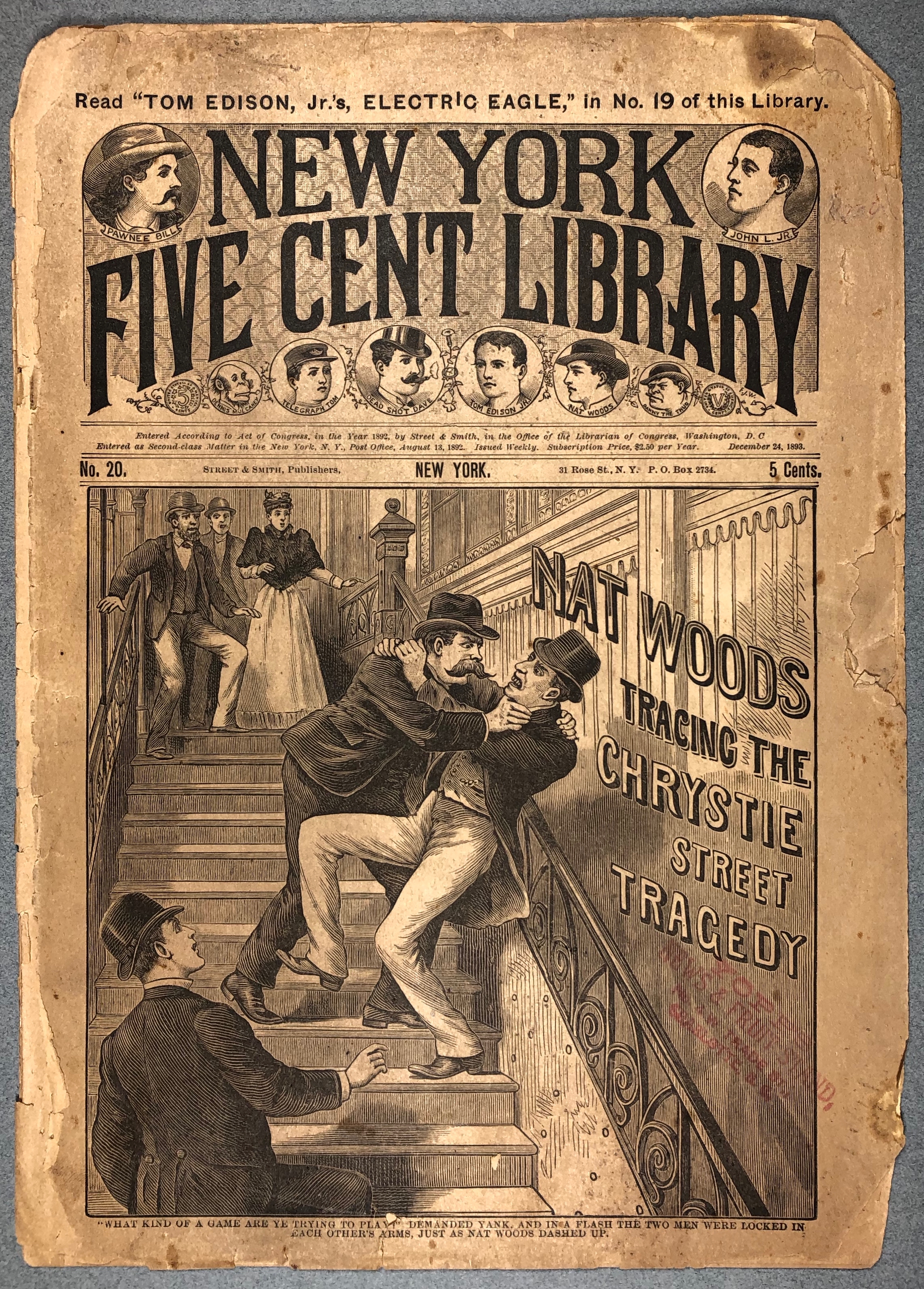
Nat Woods Tracing the Chrystie Street Tragedy — the 1892 New York Five Cent Library issue that started the trail.
Of the few copies of dime and nickel libraries that survive, many are marked with rubber stamp impressions, usually from a seller, or reseller, or even an owner. These stamps could serve as advertising, and most of those sellers were located in larger northeastern and mid-western cities. So when I casually read the address on the rubber stamp on this copy, I was surprised to discover that it was from a seller in Charlotte, North Carolina. My purchase of this piece was from a seller in the Northeast, so it is obviously well travelled. And I live in the bustling city of Charlotte, which is now a substantial banking center. But in 1892, Charlotte was an industrial town of moderate size that relied on the manufacture of textiles for employment, like many other places in the Carolinas.
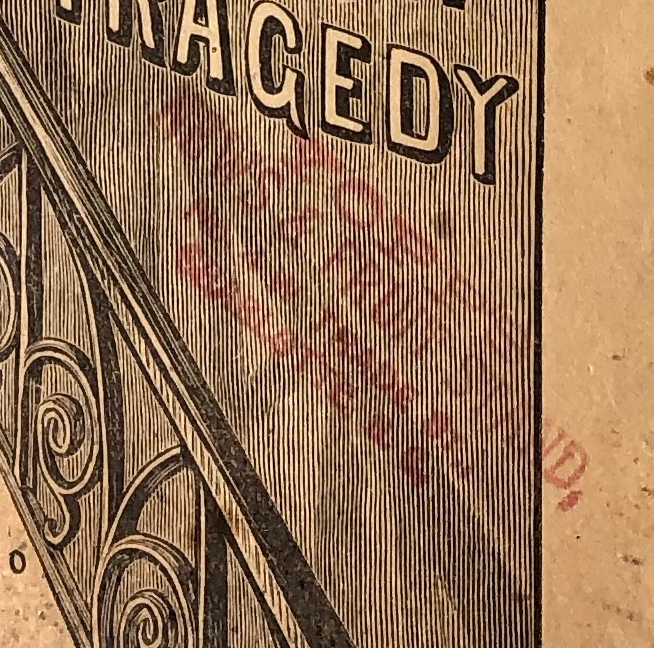
The YOPP’S stamp impression: YOPP’S NEWS & FRUIT STAND, No. 4 W. Trade St., Charlotte, N.C.
Trade Street and Tryon Street intersect at the very center of Charlotte, and for many years the corner has had wide sidewalks, big hotels, tall office buildings, and even a small park. Curious about what it may have been like in 1892, and curious about who “Yopp” might have been, I posted these notes and some photos in a couple of places on Facebook. People were intrigued but couldn’t offer much in the way of information.
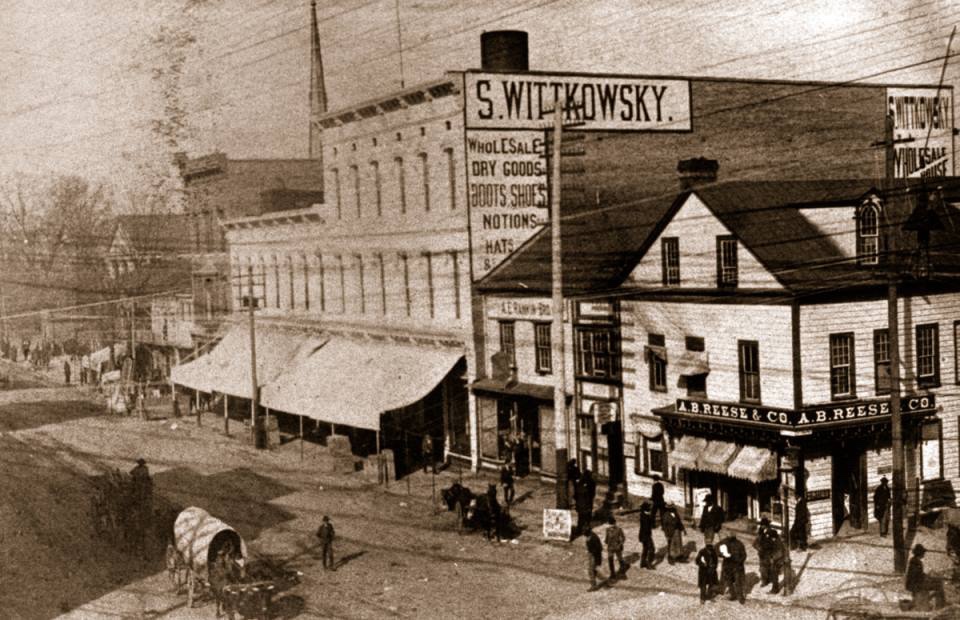
Charlotte, Trade Street at Tryon Street, ca 1890 — the corner that would become Yopp’s territory.
Then I heard from Vance Pollock. He and I had crossed paths through music (my former career field), and he does a great job of finding information about obscure music artists and recordings of the Carolinas. He pursued the search for Yopp with such dedication that I could hardly keep up. And Vance found him — photos, plats, directory listings, news articles.
George Yopp, of Wilmington and Charlotte
George Yopp was born in 1859 in Wilmington, NC. It is uncertain when he moved to Charlotte and opened his News & Fruit Stand business, but it is not shown on the 1890 plat of the intersection, and is shown as “Confy” (Confectionery) on the 1896 plat. The weekly New York Five Cent Library issue that bears his stamp was published on December 24, 1892, so clearly he was in business before then, perhaps as early as 1891. From the plat, it seems Yopp had a small newsstand and snack counter in a tiny store front next to the drug store on the NW corner of Trade and Tryon.
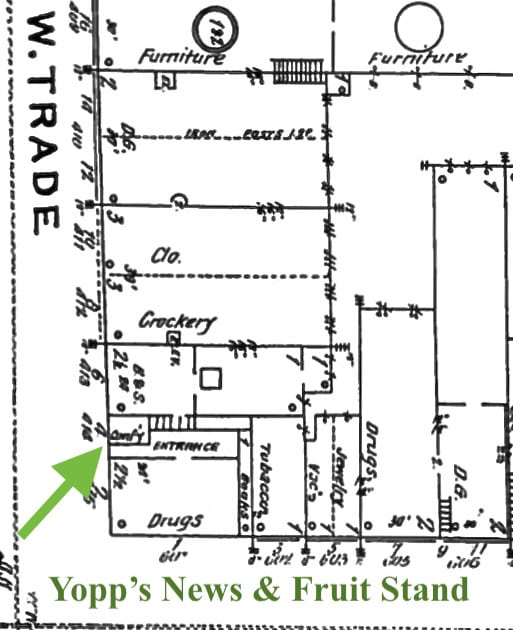
From an 1896 plat of Trade Street — “Confy” meant Confectionery, or Yopp’s News & Fruit Stand.
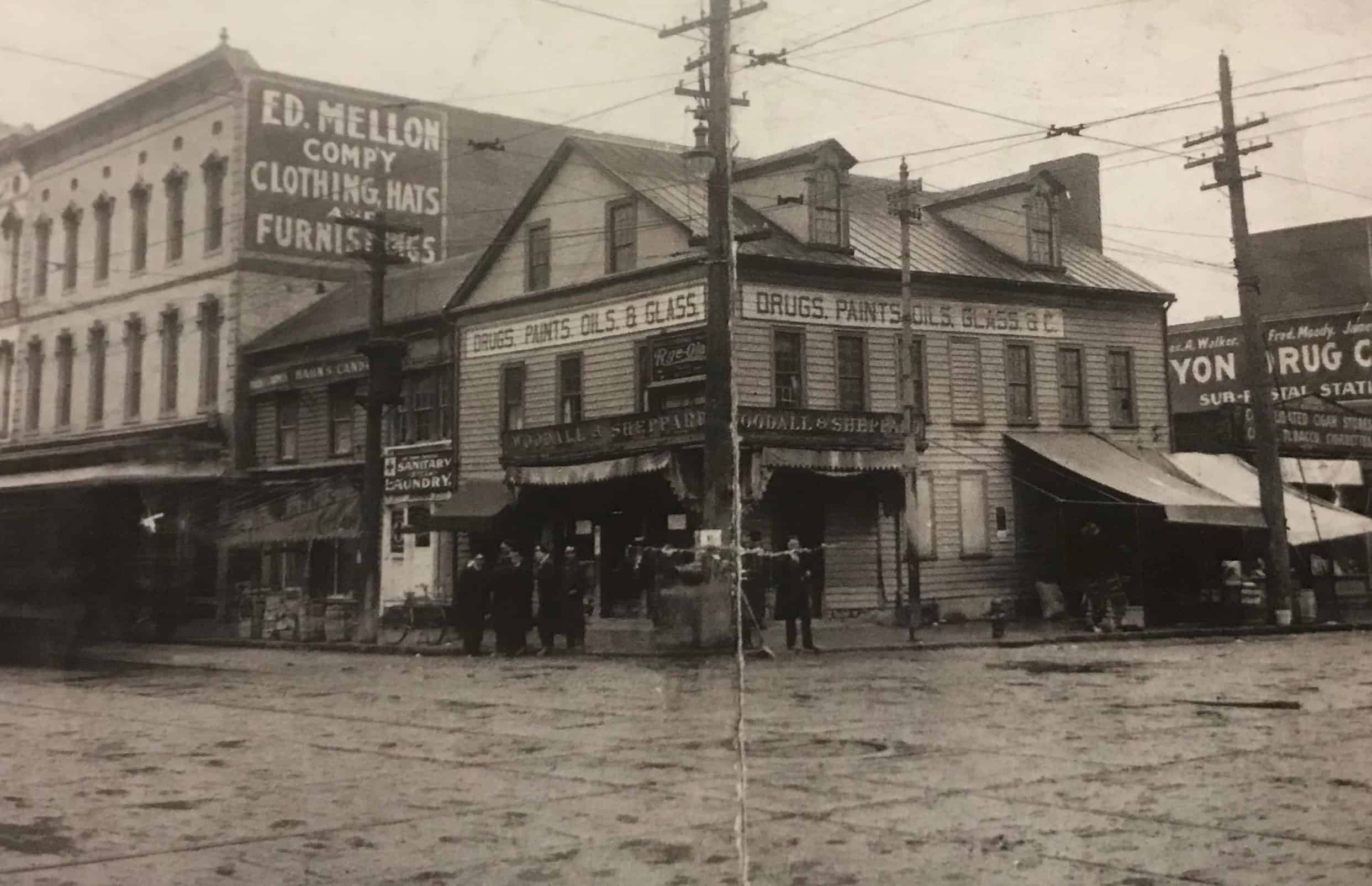
NW corner of Trade (left) and Tryon Streets, Charlotte, NC, 1890 — the laundry storefront next to the drug store would soon become Yopp’s.
An 1897 Charlotte City Directory lists Geo. Yopp with his business and home addresses. An odd classified ad from the same year mentions a fight at Yopp’s — I didn’t send in the 2 cents to get the lowdown.
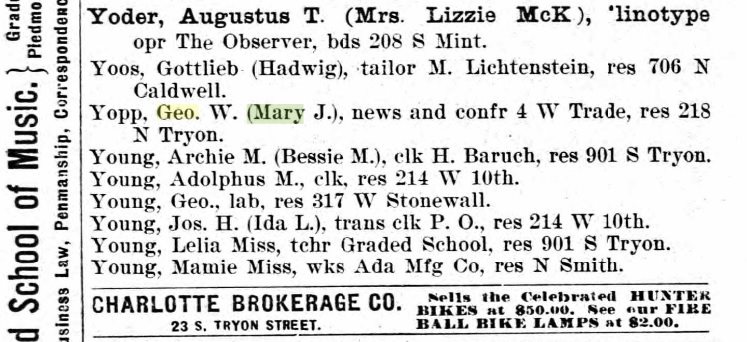
George Yopp in the 1897 Charlotte City Directory.
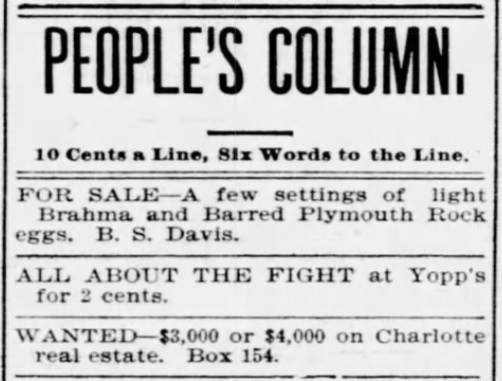
1897 classified ad — a fight at Yopp’s, full details for two cents.
Vance Pollock’s further research indicates that George Yopp continued with the News & Fruit Stand through much of 1897, when he moved to a small attached building up the street at 30 W. Trade St. There he opened a “Five- and Ten-Cent” store, but in about a year sold the location to an auction company.
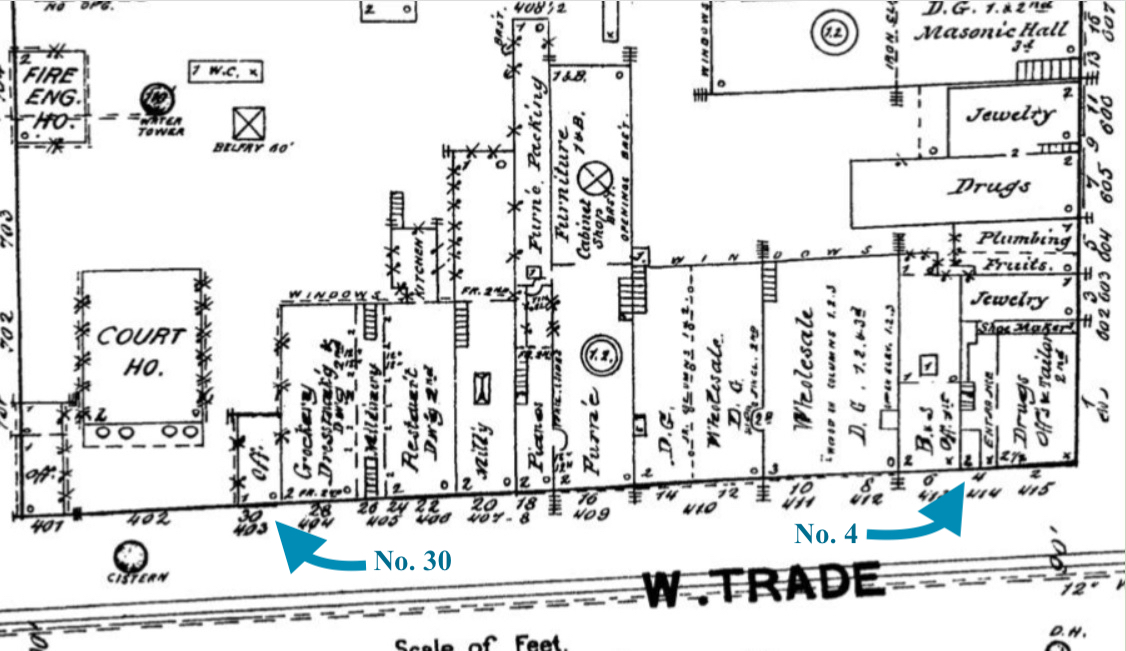
1890 Sanborn map of West Trade Street, annotated — Yopp’s subsequent move further west marked along the row.
A small bit of news from January of 1899 notes that George Yopp had quit (meaning left) Charlotte at the end of 1898, moving back to Wilmington.
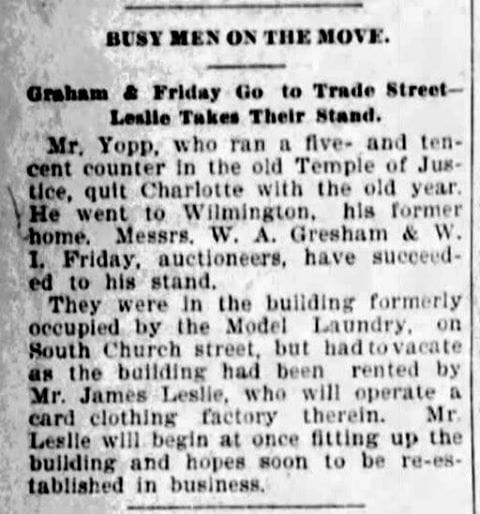
Charlotte newspaper, January 1899 — George Yopp had “quit” Charlotte at the end of 1898 and returned to Wilmington.
In the 1800s — and even to an extent today — small businesses sold a wide variety of items in daily auctions. This little building, clearly marked AUCTION, is visible in this early-1900s coloured postcard. That must have been the building where George Yopp’s Five-and-Ten-Cent store previously operated. Mr. Yopp passed on in 1902, aged 53. If anyone knows people named Yopp around Wilmington, NC, they may want to let them know about this article. Thanks to Vance Pollock for the splendid and thorough research.
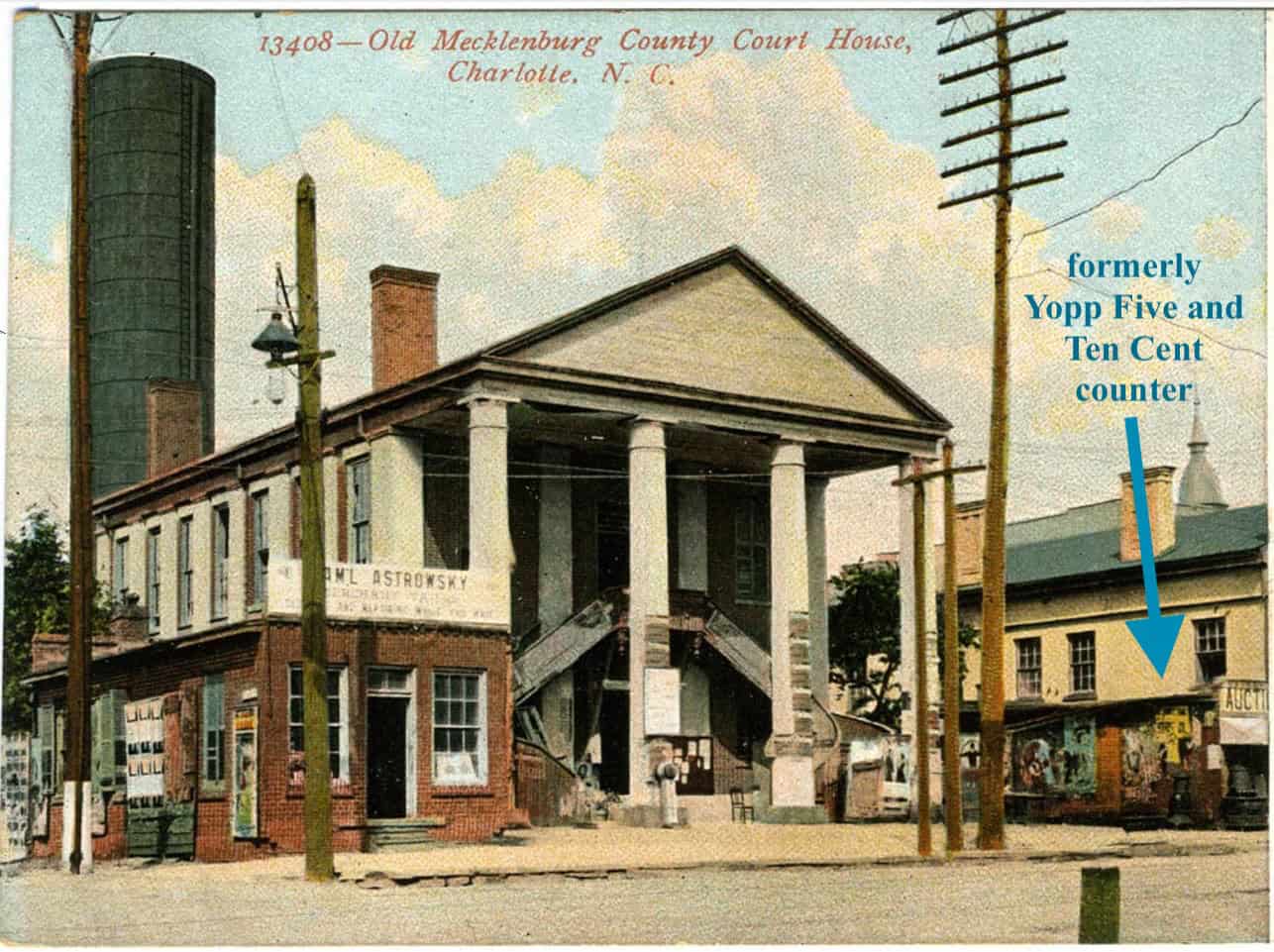
Early-1900s postcard, Charlotte — the AUCTION building (centre) likely the former site of Yopp’s Five-and-Ten-Cent store, ca 1898.
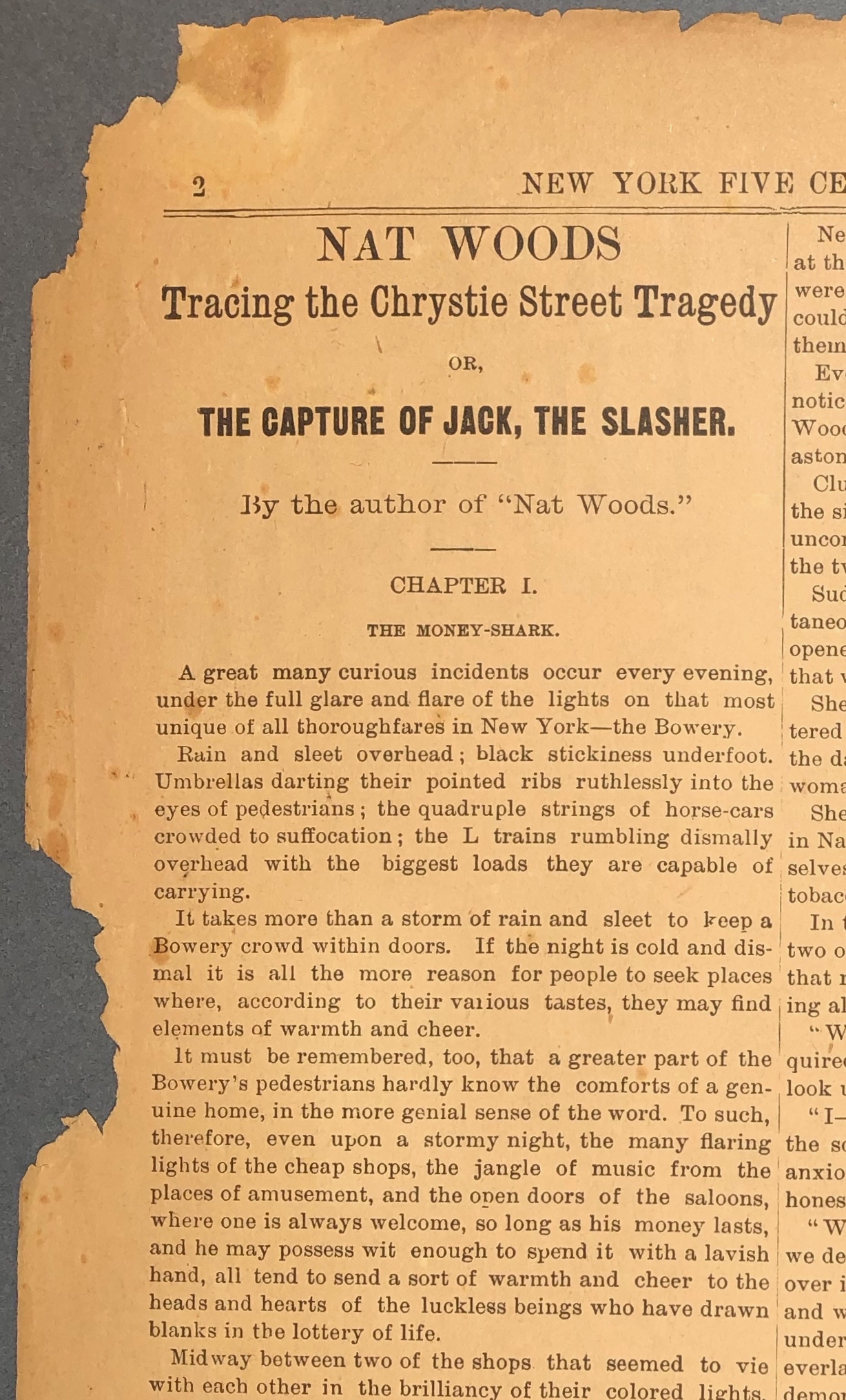
The New York Five Cent Library issue, restored to its origin story.
The upshot of all this intriguing historical minutiae is that we now know clearly just where this particular New York Five Cent Library copy was purchased for a nickel around Christmas of 1892. I expect they enjoyed the lurid crime story between those flimsy covers.
“Every old book has a journey behind it.”
— Mark Williams, Dark Lantern Tales